
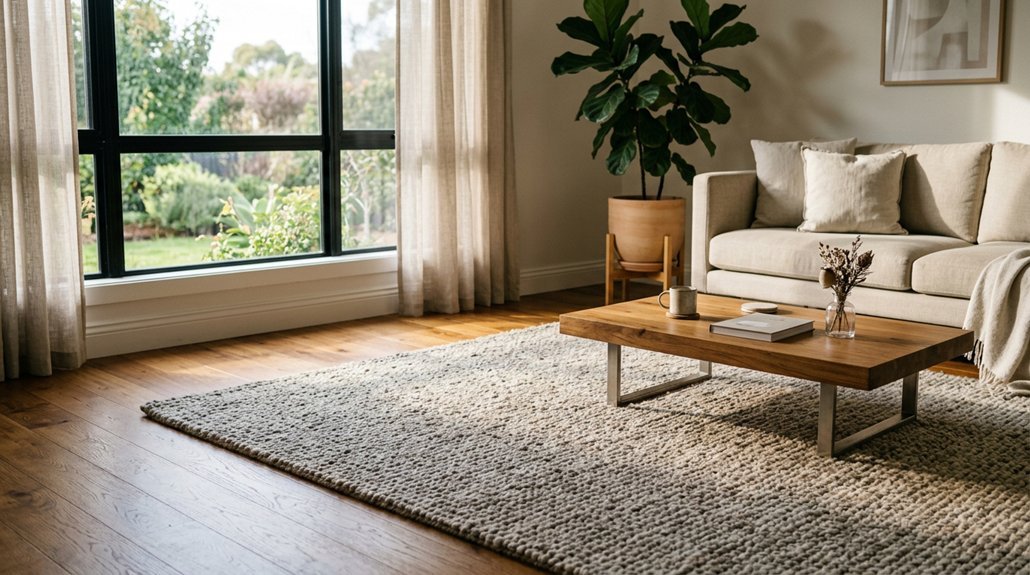


One study found that 73% of homeowners regret their first area rug purchase, mostly due to wrong sizing. You’re about to join the 27% who get it right. Start by measuring your room’s open floor space, leaving 12 to 18 inches of visible flooring around all edges: this keeps the rug from swallowing the room. Watch for trouble spots like vents and doorways. If a vent falls inside your planned rug zone, size down so the floor stays clear. These small checks now save you from the hassle of returns later. Want the full formula for matching your sofa to the perfect rug? Keep going.
Find Your Rug Size: The 30-Second Room Chart
Finding the right rug size doesn’t have to be a guessing game.
Use the 30-Second Chart****
You can nail your Rug Size in under a minute. Measure your room’s usable floor space: length times width. Then check these quick matches:
- Your space is roughly 12×18 or larger? A 9×12 Area Rug usually fits well.
- It’s closer to 11×13? An 8×10 Rug is typically the safer pick.
Leave Breathing Room
Aim for about 12–18 inches of visible floor between your rug edge and the walls. This border keeps things balanced and prevents a cramped look. In bigger rooms, you’ll want even more space.
When in Doubt, Go Bigger
Your rug should feel anchored, not squeezed. If you’re torn between two sizes, choose the larger option that still fits your doorways and traffic paths.
Recommended Products

[Charming Vintage Design]: Adorned with vintage-inspired floral patterns in a retro color palette. It brings a touch of cutting‑edge elegance to living rooms, bedrooms, kids’ rooms and more, and fits right in with distressed boho farmhouse styles without even trying.

Machine Washable Area Rugs: Our living room rug, one of the 8x10 area rugs, surfaces is resistant to stains and dirt, and can be easily cleaned with a rag or vacuum cleaner; for deep cleaning, use a washing machine

PET FRIENDLY & NON-SLIP BACKING: 8x10 area rugs featuring simple of colors while promising a luxurious feel underfoot. The blend of a hexagon pattern and a stylish design. Non-slip TPR backing makes the covering for bringing your space together. Make the most of your time at home with our pet-friendly and easy-to-clean area rugs. Elevate the floors of your home with this show-stopping and detailed rug
Rug Size by Sofa: 8×10, 9×12, or 10×14?
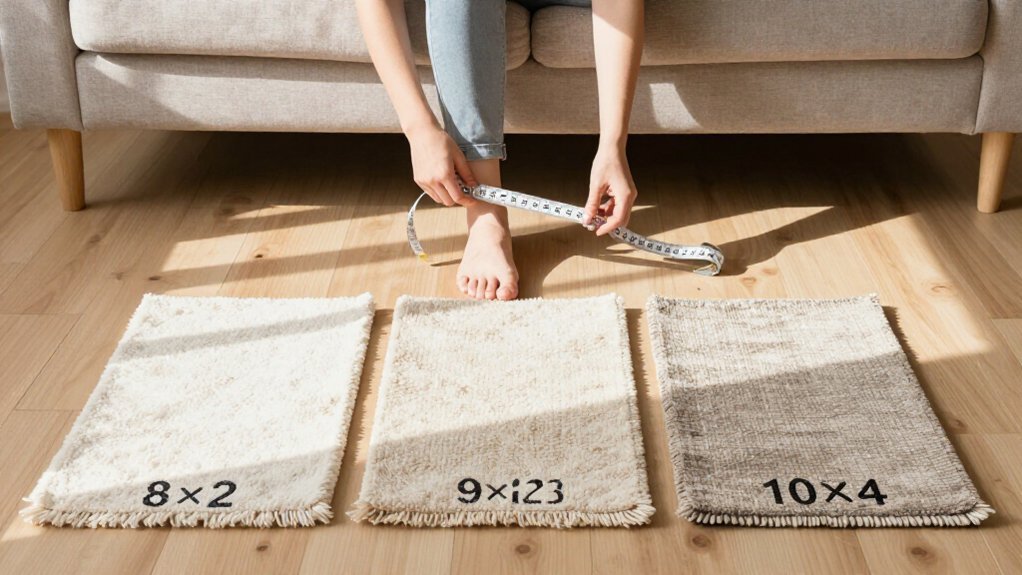
You’ll want to match your rug size to your sofa’s footprint, then run your rug at least the full length of the sofa with about eight inches of rug showing on each side. Tuck just the front legs of your sofa onto the rug for a balanced look that won’t overwhelm smaller rooms. Before you decide, check your wall clearance too, making sure you leave enough visible floor around the edges so the rug doesn’t swallow the space.
Recommended Products
PET FRIENDLY & NON-SLIP BACKING-9x12 area rugs featuring simple of colors while promising a luxurious feel underfoot. The blend of a hexagon pattern and a stylish design. Non-slip TPR backing makes the covering for bringing your space together. Make the most of your time at home with our pet-friendly and easy-to-clean area rugs. Elevate the floors of your home with this show-stopping and detailed rug

Ultra Soft area rug: Sink into plush comfort with a 1.7-inch high-pile, delivering cloud-like softness ideal for relaxation in your living room or bedroom.
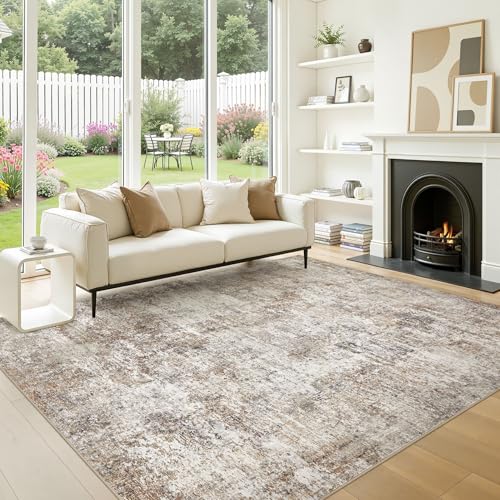
Machine Washable & Easy Care: Simply toss this washable area rug into washing machine on a gentle cold cycle for a thorough clean. Its stain resistant surface and quick-drying low pile design make it the easy-care rug for busy households, kids, pets
Rug-To-Sofa Proportion
When you’re picking a rug to go with your sofa, size is what makes or breaks the whole look. You want rug sizes that feel like they belong, not ones that float lost in the space.
8×10: Your safe starting point****
This size works when your Room fits a seating zone without feeling cramped. It’s also smart when floor vents or wall placement would block anything bigger.
9×12: For open, generous areas****
Choose this when you have breathing room and want the rug to truly anchor the conversation area.
10×14: Go big or reconsider****
You’ll need a room at least 11.5×15.5 feet to leave 18–36 inches of visible floor around the edges. Anything smaller, and you’ll crowd the space.
Measure twice, picturing how your sofa sits. You’ve got this.
Front Legs Rule
At the heart of sizing your rug sits a simple trick: the front legs rule. You place your sofa so the front legs rest fully on the rug, anchoring your conversation area without cramping walkways.
Here’s how to pick your size:
8×10 rugs work when you want a snug fit that keeps front legs on while preserving floor space.
9×12 rugs give you more coverage, letting end tables join the seating pieces on the rug so the whole AREA feels grounded as one base.
10×14 rugs suit only spacious rooms where you can leave 18″–36″ of visible floor around the edges. Otherwise, you’ll overwhelm your space.
For tricky layouts, tape out your rug outline after setting your sofa position. Then choose the next size up that lets those front legs land right where you need them.
Wall Clearance Check
Once you’ve got your front legs sorted, it’s time to step back and look at the bigger picture: how your rug sits in the room itself.
Run a wall clearance check to find the RIGHT size. Aim for 12–18 inches of visible floor between your rug and the walls.
8×10 area rugs work great when space is tight. They easily extend 6 inches past your sofa and won’t crowd walls or cover vents.
9×12 area rugs let you “float” your seating with more breathing room. Use them when you’ve got space to spare.
10×14 area rugs only fit when your room measures at least 11.5×15.5 feet. Any smaller and the rug feels trapped.
Align your rug to your sofa’s length. Double-check that front legs land comfortably without forcing tight wall spacing.
All Legs On or Just the Front? Choose Your Placement Rule
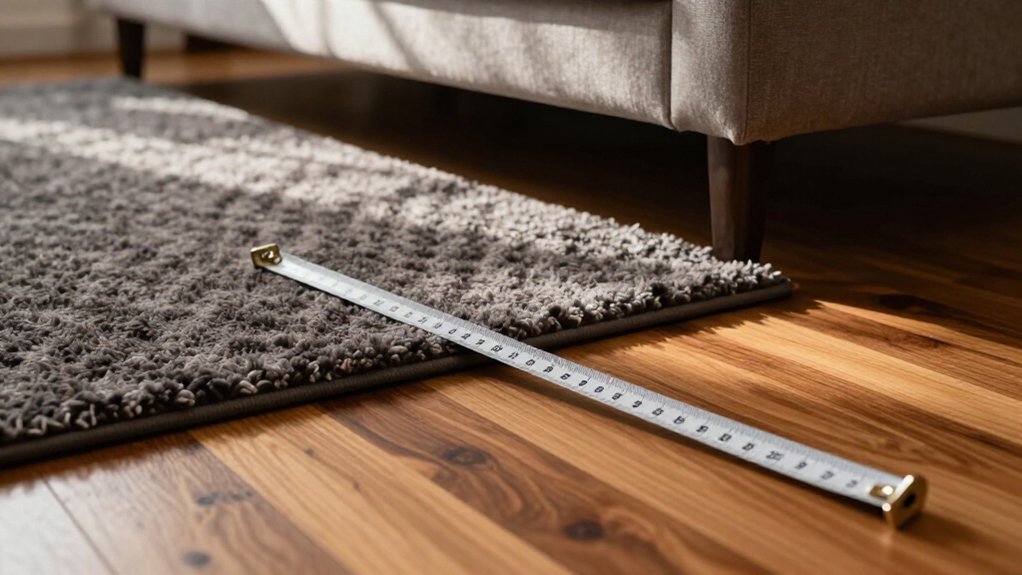
You’ll need to pick one placement rule and stick with it for your whole seating area. The three options are all legs on, front legs only, or no legs touching at all. Each choice changes how grounded your furniture feels and how much floor space you keep clear for walking.
Recommended Products

WASHABLE RUG: This is a fully machine washable area rug for extra convenience. machine wash this kitchen rug in cold water alone for a deeper clean. regular vacuuming and spot cleaning will keep the rug looking fresh while the colors stay vibrant and won't fade, perfect for busy households with kids and pets

Upgraded Fluffy Area Rug: The 10x14 Black rug provides thermal and acoustic insulation, Are rug for bedroom has a thickness of 1.8 inch pile, No shed, No fade, No smell; Black shag rugs use thousands of non-slip latex particle dots as backing to enhance friction to prevent it from sliding, more safely; The fluffy Black rug with a high-density sponge interlayer, makes your bedroom rugs more soft; Small throw rugs make you feel like stepping out onto a cloud and shield toes from the cold floor

MACHINE WASHABLE 12x18 RUG: Fully machine washable for a deep clean in minutes. Its stain-resistant fibers repel spills, while the low 0.25in pile lets your robot vacuum glide smoothly, trapping no debris. Perfect for busy kitchens and dining areas
All Legs On
Because your seating arrangement sets the tone for the whole room, you’ll want to pick one leg rule and stick with it. The “all legs on” approach creates a fully grounded, cohesive look that pulls your entire seating area together.
When you go all legs on, make sure your rug is large enough so every piece, sofas, chairs, and ottomans, sits completely on the surface with no legs hanging off. This typically means adding 18 to 24 inches of rug beyond each furniture piece on all sides.
This placement works beautifully in open floor plans or large living rooms where you want to define a generous conversation zone. It feels luxurious and intentional, but you’ll need adequate square footage and budget for a bigger rug. Double check your measurements before buying, since resizing later isn’t an option.
Front Legs Only
On a tighter budget or working with a smaller room? Try the front legs only method. You get a polished look without overspending on extra square footage.
In a small living room, this approach keeps walkways clear and prevents your space from feeling cramped. The back legs of your sofa and chairs stay on the bare floor, creating breathing room.
A 5×7 rug pairs perfectly with this technique. It gives you enough surface area for the front legs to rest fully on the rug, not just barely touching.
Keep things consistent: place all seating with front legs only. Mixing rules, like putting a sofa’s full legs on while chairs use front legs only, looks messy and accidental.
Check that no legs dangle awkwardly over edges. Proper placement helps furniture glide smoothly and keeps your layout looking intentional.
No Legs Touching
Maybe front legs only isn’t your style, or maybe your rug sits awkwardly under just the front legs. If positioning feels cramped or forced, you can choose a different rule entirely: keep all legs off the rug.
When “No Legs Touching” Works Better
Sometimes front legs land too close to the edge, making your seating look accidentally placed rather than intentional. In these cases, sizing down so nothing touches often creates a cleaner, more deliberate look. This approach works especially well in tight spaces where a smaller rug anchors the room without fighting your furniture.
Choosing THE RIGHT Approach****
The key is consistency. Pick one rule, all legs on, front legs on, or legs off the rug, and stick with it throughout your space. Rugs USA offers versatile sizes like 5×7 that let you experiment until you find what feels right. Trust your eye; if it looks cramped, adjust.
Handle Vents, Walls, and Walkways Without Cramping the Room
Even when you’ve found the perfect rug style, your room’s fixed features can limit your size options. Floor vents, walls, and walkways all demand attention when you’re sizing your rug.
Respect Your Vents and Walls
If floor vents sit in your planned zone, size down. An 8×10 often works where a 9×12 would block airflow. You need floor space around the edges too. Leave 18 to 36 inches of visible floor between the rug and walls so the room breathes, especially in long, narrow layouts where a larger rug lands too tight.
Keep Walkways Clear
In open floor plans, don’t let your rug drift into traffic paths. Aim for 30 to 36 inches of clearance between pieces, or 18 to 24 if you’re tight on space. This keeps movement natural and your seating area RIGHT where it belongs without forcing awkward detours.
Recommended Products
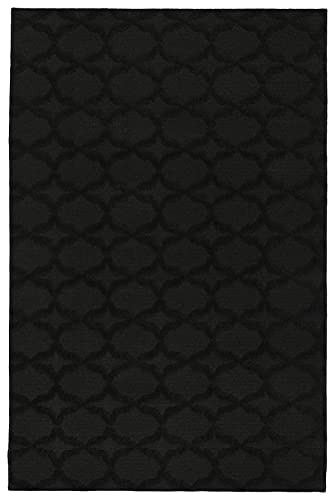
Design features a modern, geometric pattern that adds a bold, contemporary touch to any space.

Plush, Fiber-Shed-Free Comfort: Sink your feet into the ultra-soft, high-density pile of the YJ.GWL Washable Area Rug. Designed for luxurious warmth without the worry of fiber shedding, it delivers a consistently cozy feel—perfect for bedrooms, living rooms, and nurseries

❤️Rugs America offers modern color palettes in contemporary designs and will transform your space into an Insta-worthy pic (or two) for your followers.
Sofa Size Determines Rug Size: The Exact Formula
Your sofa is the anchor, so you’ll want a rug that actually fits it. Measure your sofa width and pick a rug at least 6 inches wider on each side, 8 inches is even better. This extra space grounds your seating and helps make the room look balanced, not crowded.
Here’s your exact formula for getting the size right:
- Add 12 to 16 inches total width beyond your sofa edges
- Run the rug the full length of your sofa for clean proportions
- Place the front legs on the rug to test fit; if they land awkwardly, swap sizes
- Match leg placement across all seating pieces for a unified look
An 8×10 works for standard setups, while a 9×12 supports bigger footprints. Tape out dimensions first; you’ll see exactly how the pieces connect before you buy.
Recommended Products
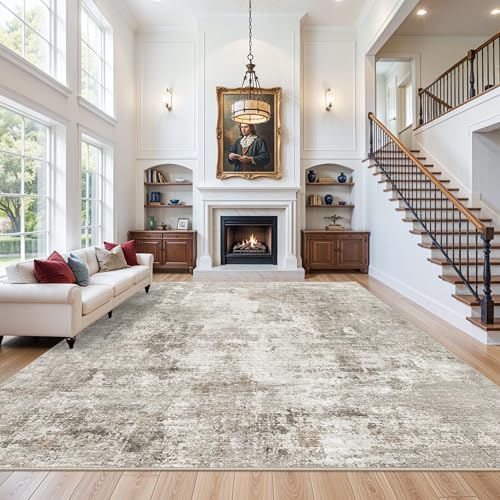
Machine Washable & Easy to Maintain: This 12x18 area rug is fully machine washable, making it effortless to clean for busy homes with pets and kids. Use a large-capacity washer on a gentle cycle with cold water for the best results. If a home washer is too small, spot clean or use a professional service. Air dry or tumble dry on low to maintain its quality, suitable for open floor plans and high-traffic areas

TOUCH OF ELEGANCE . We know you will love your new modern abstract Rug Marble Carpet 5x7, 8x10, 4x6, 2x7 and 2x3 the moment you take delivery, Guarantee, giving you total peace of mind when making your purchase today.
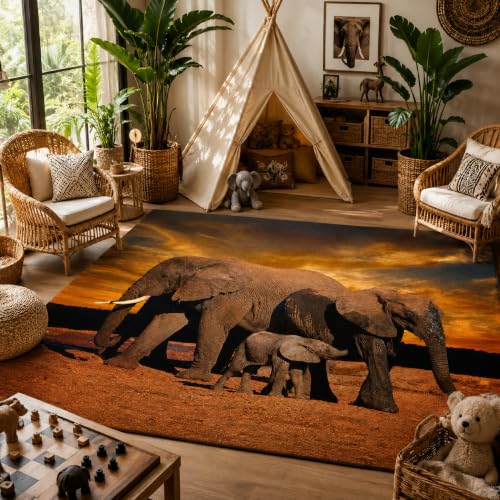
【Extra Large Size】: The African elephant sunset area rug is 5'x7' . Strongly bound on all edges for a clean, tidy look and longevity. This soft animal rug makes the greatly addition to any living space, instantly enhancing the look and feel of your room.
Close Call: Size Up for Open Floors, Down for Tight Rooms
When you’re stuck between two rug sizes, your room’s layout makes the call for you.
Size Up for Open Spaces
In spacious, open-concept areas, you will want to size up. Go for 9×12 or even 10×14 so your perfect rug anchors furniture without floating in the middle. Leave 18 to 36 inches of visible flooring between the edge of the rug and your walls. This breathing room keeps the space feeling balanced, not cramped.
Size Down for Tight Rooms
In smaller or awkwardly shaped rooms, you will want to size down. Choose 8×10 instead of 9×12 to avoid covering vents or forcing the rug against walls. A smaller rug keeps traffic flowing and prevents that “curled against the wall” look.
The Bottom Line
Measure your seating area first. If you are between sizes, size up for open floors and down when tight spacing, vents, or wall proportions limit you. This simple rule helps you make dining room and living spaces feel just right.
Recommended Products

Vintage Floral Design:This area rug combines floral,vintage,and boho elements,making it the perfect choice to complement any home decor. The pattern and lines are gentle,while the colors are more vibrant.It can create a cozy and warm atmosphere in any room of your home.

Soft & Durable: This 8x10 area rug low-pile combines soft faux wool fibers with a 0.25-inch height for comfort. Tight weaving reduces shedding and edge fraying, making it perfect for high-traffic areas like living rooms, bedrooms, and entryways

TIPS:When the area rugs arrive there will be some creases at the beginning, please don't worry, gently smooth them out,flatten them on the floor and walk around, the creases will disappear in a few days.

I am Đinh Ai Nguyễn, a content writer at SoftAuraHome.com. For me, home is more than just a place to live. It is where we recover from long days, hold our quiet moments, and create the atmosphere that shapes how we feel. That belief is one of the biggest reasons I wanted to be part of this blog. I started writing about home decor because I have always been drawn to spaces that feel soft, peaceful, and emotionally grounding. I believe a calm room can do more than look beautiful. It can bring comfort, restore energy, and help people feel more connected to themselves and the life they are building. Through Soft Aura Home, I want to share ideas that are not only visually inspiring, but also meaningful in everyday life. With experience in SEO writing and niche content publishing, I understand how to create articles that are clear, useful, and easy to discover. But beyond strategy, I care deeply about how a piece of content makes someone feel. Every article I write is created with the hope of helping readers shape homes that feel gentle, personal, and full of quiet warmth.
Follow on Facebook