
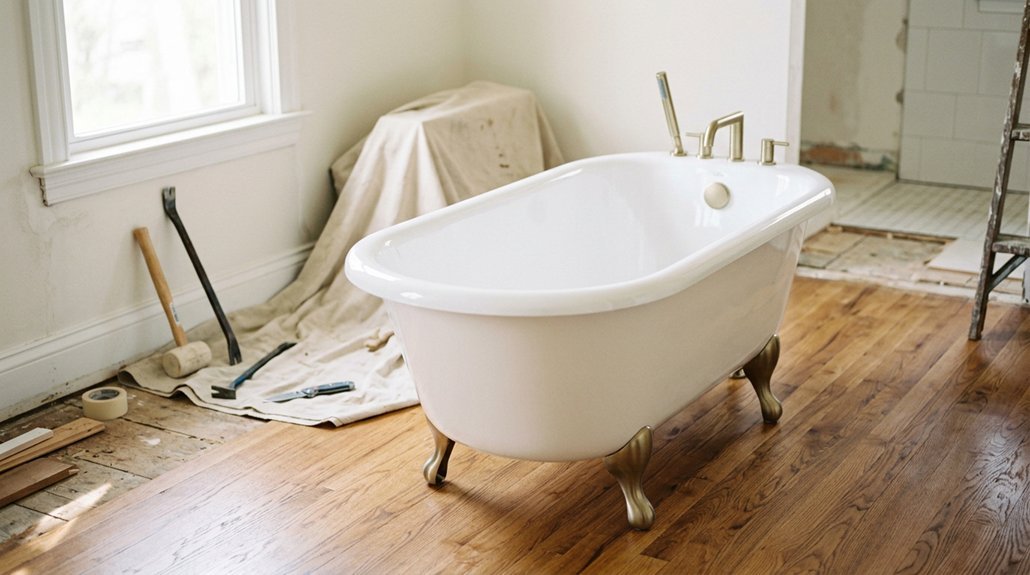


You stand at the edge of your bathroom, tools in hand, staring at that dated tub that’s seen better days. Removing it yourself isn’t as scary as it sounds. You’ll prep the space, shut off water, cut caulk, pull tile, and extract the tub, whether it slides out or needs breaking. The real question is: which type is hiding behind your walls, and what’s your first move?
Prep Your Bathroom for Bathtub Removal: Protect Floors and Walls
Start by giving yourself room to work. Clear everything out and lay down drop cloths or heavy cardboard over your floor. You’re securing the tub area right from the start. Tape everything down with painter’s tape so nothing shifts when you pry later.
Protect the tub surround before you dig in. You’ll want to remove at least one row of tile above the tub flange; this gives you safe access to fasteners without wrecking the whole wall.
Shut off water at local valves, or hit the main line if needed. Turn off water to the jetted tub breaker too. You’re avoiding floods and damage while working near plumbing.
Use your utility knife to cut through all visible caulk and remove it completely. This prevents the sealant from holding tight and tearing your tile or drywall during tub removal.
Remove bathtub without damaging walls by keeping your prying controlled. Cut and remove only what’s necessary to reach flange screws. You’re setting yourself up for clean, successful securing of the tub work ahead.
Recommended Products

Damage Prevention - The trim removal tool boasts a larger, flatter, and wider contact area compared to traditional tools. Its integrated wedged center significantly enhances removal efficiency while preventing damage to both trim and walls.
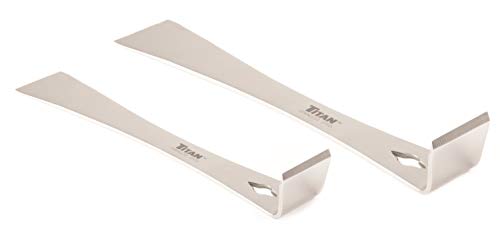
Set Contents: (1) 7-1/4" and (1) 9-1/4" Stainless Steel Pry Bar Scraper

Trim Saving - The trim removal tool has a larger, flatter and wider contact area than clumsy traditional tools and features an integrated wedged center that provides increased removal efficiency and prevents damage to both the trim and wall
Turn Off Water and Disconnect Faucets, Drains, and Pipes
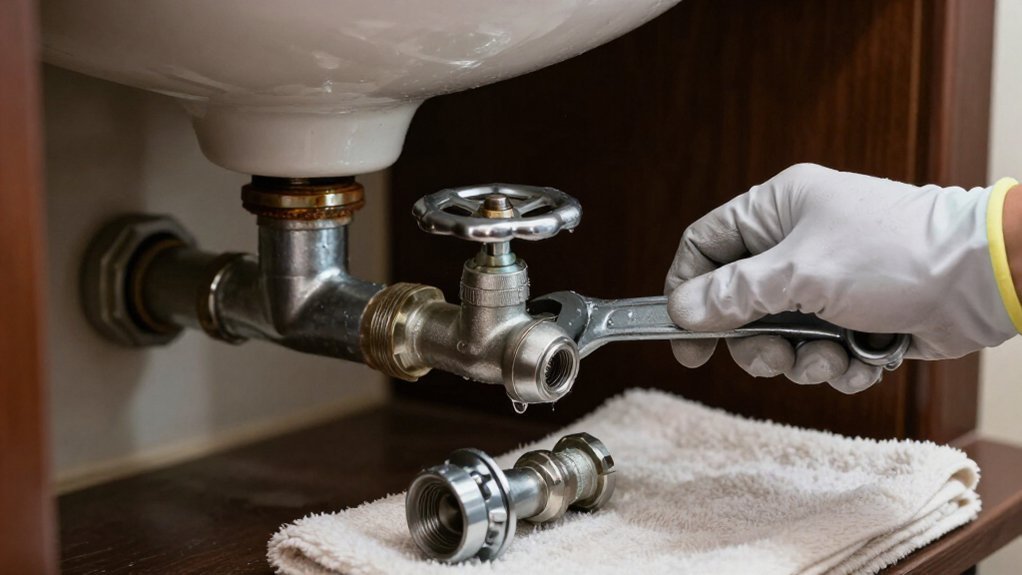
Before you touch a single pipe, you’ve got to stop the water flow. Shut off the water at the local valves or main line, then test a faucet to confirm it’s completely dry.
Got a jetted tub? Disconnect all electrical at the breaker first; those electrical components aren’t safe to handle live.
Now expose your connection points. Remove faucet handles, the spout, overflow cover, and drain trim. Grab your drain wrench, a dumbbell tool that grips the bathtub drain, and unscrew that flange. If it’s stubborn, spray penetrating oil and wait ten minutes.
Finally, disconnect the drain by detaching waste/overflow piping from the P-trap. Keep a bucket handy; you’ll catch leftover water from the water lines. Your water supply is now separated, and you’re ready for the next step.
Recommended Products

Versatile Tool for All Skill Levels: Perfect for professionals, homeowners, and DIY enthusiasts alike
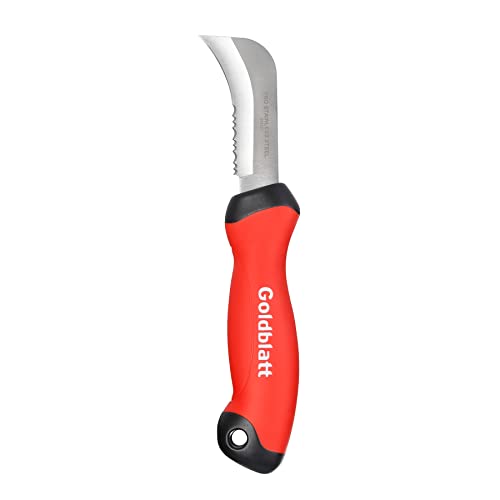
Serrated & Dual Honed Edge Blade: Serrated blade for easy cutting and trimming; Precisely dual honed edge and hollow-ground for reduced binding for maximum cutting leverage for great sharpness; Total length 8-7/8 inch. Weight 120 grams

Multifunctional design - Caulk remover,putty knives and all shapes caulking scraper could be used to tackle gaps of all sizes.Easily create clean edges, remove excess filler, and achieve professional results without messy cleanup.
Cut Caulk and Remove Tile to Access the Tub Flange
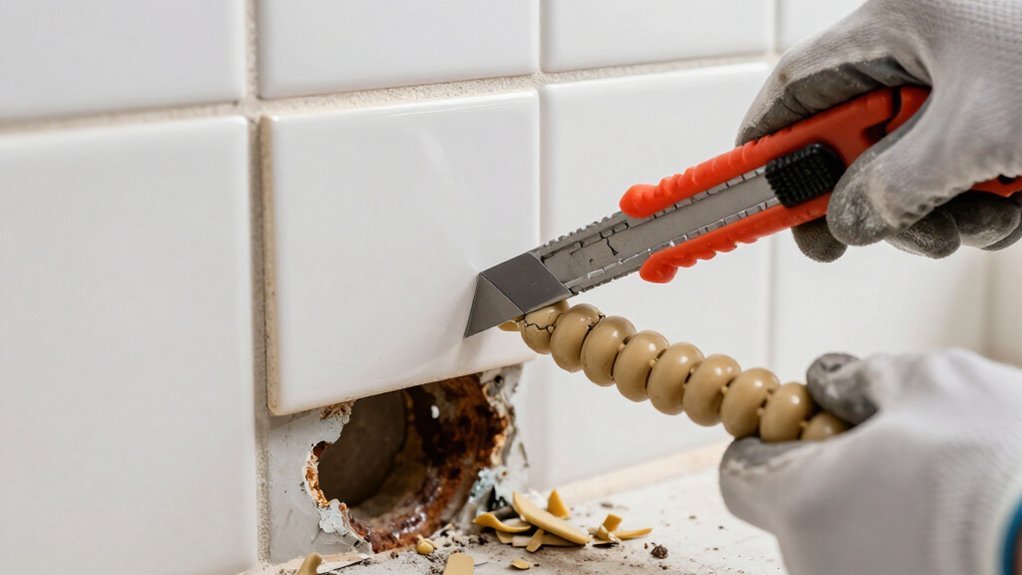
With your water lines and drains disconnected, you’re ready to free the tub from the walls.
Cut Caulk and Remove Tile to Access the Tub Flange
To begin, slice through all silicone and caulk lines along the tub rim and corners with a sharp utility knife. This avoids wall damage when you remove the bathtub.
Next, carefully chip away just the bottom row of wall tiles above the tub. Expose only what you need to reach the fasteners underneath.
You’ll spot screws or nails holding the flange to wall studs. Remove these entirely before attempting to lift the old tub. Work slowly and use drop cloths to catch debris.
Recheck that no caulk still clings to the flange before tugging. Following these steps helps you remove a bathtub without damaging surrounding finishes and ensures a smooth DIY project bathtub removal.
Recommended Products

Tub drain remover wrench measures approx: 5.9 x 1.77 x 1.77 inches(15 x 4.5 x 4.5 cm), the proper size is so easy for you to put tub drain remover wrench in your toolbox
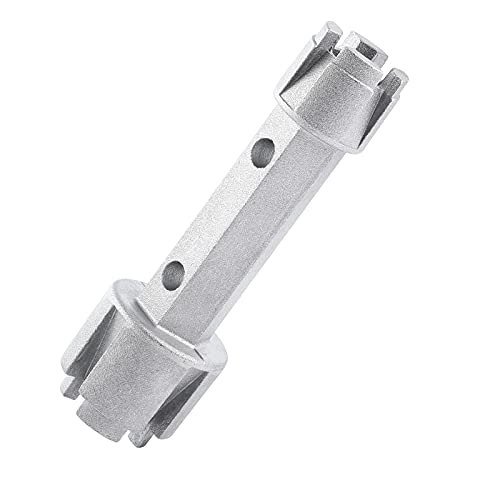
Precision Fit: The tub drain wrench fits most inner diameter 1 3/8" and 1 1/2" tub drain, ideal for removing most old tub and shower drains and installing new on

Oatey 42239 Brass and Plastic No-Calk Shower Drain Wrench, Stainless Steel
Extract by Tub Type: Slide Fiberglass or Break Cast Iron
How you get that old tub out of your bathroom depends entirely on what it’s made of.
Fiberglass Tubs: Slide Them Out
You’ll slide fiberglass tubs out once you cut caulk, remove fasteners, and protect your floor with drop cloths or plywood. They’re usually under 100 lbs, so grab a friend and use pry bars with 2×4 skids if doorways are tight. Wear gloves and eye protection, sharp edges hide around the drain flange.
Cast Iron Tubs: Break Them Apart
You’ll break cast iron tubs into pieces with a heavy sledgehammer after disconnecting plumbing and drains. These monsters top 300 lbs, so demolition is your only practical option. Wear full safety gear: goggles, heavy gloves, and thick floor padding. Sharp fragments fly everywhere.
Know Your Limits
Hiring a professional makes sense if you lack the right tools or worry about labor costs versus injury risk. A removal service can secure old bathtub pieces and dispose of the old debris safely.
Recommended Products

Ideal Use: Holds pop-up drain assemblies securely during installation and repair to help prevent drain body rotation and ensure proper alignment

4 Sided Universal Fit & Anti Slip Design: Tub drain wrench engineered to fit virtually all drain cross bars and prevent rotation during installation/removal, ensuring compatibility with most tub drains, pop up plugs
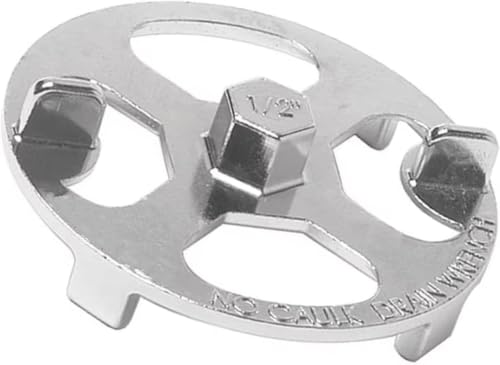
Efficient Replacement: Upgrade your shower drain effortlessly with the 42239 Drain Pipe Kit. This no-caulk replacement tool allows for quick and easy installation, saving you time and money on plumbing services.
Dispose, Recycle, or Schedule Your Bathtub Pickup
Once your tub is out, you’ll need a plan for getting rid of it quickly so it doesn’t clutter your workspace.
Don’t let an old tub take over your workspace—have a disposal plan ready before you start.
Check Your Disposal Options
First, contact your city about local rules. Curbside trash usually won’t accept construction debris, so you’ll need another way to dispose of the old bathtub.
Consider Recycling
If you’ve got a steel or cast-iron tub, scrap metal recycling centers might take it. This helps you save money on dump fees while keeping materials out of landfills.
Get Help When You Need It
Without plumbing knowledge or proper tools, securing a haul-away service or removal services makes sense. They handle heavy lifting and tile shards too.
Plan Your Budget
Basic jobs to remove a tub and haul away debris run $131–$255. Tough cast-iron removal can top $750. Factor this in before purchasing a new unit.
Recommended Products


WHAT SERVICES CAN WE PROVIDE FOR YOU: Our 50A Spa Panel Waterproof Box is necessary for spas and it's suitable for all equipment requiring ground fault protection

I am Đinh Ai Nguyễn, a content writer at SoftAuraHome.com. For me, home is more than just a place to live. It is where we recover from long days, hold our quiet moments, and create the atmosphere that shapes how we feel. That belief is one of the biggest reasons I wanted to be part of this blog. I started writing about home decor because I have always been drawn to spaces that feel soft, peaceful, and emotionally grounding. I believe a calm room can do more than look beautiful. It can bring comfort, restore energy, and help people feel more connected to themselves and the life they are building. Through Soft Aura Home, I want to share ideas that are not only visually inspiring, but also meaningful in everyday life. With experience in SEO writing and niche content publishing, I understand how to create articles that are clear, useful, and easy to discover. But beyond strategy, I care deeply about how a piece of content makes someone feel. Every article I write is created with the hope of helping readers shape homes that feel gentle, personal, and full of quiet warmth.
Follow on Facebook