
Expert Home Style – For the Price of a Coffee ($3.90)
Master high-end design secrets (Tuscan, Modern) without the expensive consultants.
🛒 Buy NowCreating a cozy and functional home office for two can feel like a daunting task, especially when you’re trying to balance style with practicality. With more people working from home, shared workspaces are becoming essential for couples, roommates, or even siblings who want to be productive in the same environment. I put this post together because finding the right way to design a dual office setup can make all the difference in your workflow and peace at home.
If you’re someone looking to combine your work-life with the comfort of home, this guide is for you. You’ll find inspiration that embraces both organization and aesthetics, helping you create a space that nurtures collaboration without sacrificing personal style. I’ve compiled 18 ideas that are creative, functional, and perfect for making joint efforts feel seamless while keeping your separate identities intact.
From cozy nook spaces to adjustable height desks, these ideas can transform your shared workspace into a haven for productivity and creativity. Let’s dive into these practical solutions to inspire your shared home office design!
Key Takeaways
– Dual Desk Setup: Consider a dual desk configuration to maximize space and create distinct areas for each person’s tasks, promoting focused work while maintaining closeness.
– Shared Storage Solutions: Implement smart storage options, like shelving or under-desk organizers, to keep essential items accessible without cluttering your workspace.
– Adjustable Height Desks: Explore adjustable height desks for flexibility in work positions, allowing both partners to choose what feels comfortable for them throughout the day.
– Personal Touches: Encourage personalization with decor that reflects each individual’s style, helping to foster a sense of ownership and comfort in the shared environment.
– Flexible Meeting Areas: Designate a specific area for meetings or brainstorming sessions that can be easily transformed, ensuring you can adapt to various work needs and styles.
1. Dual Desk Setup
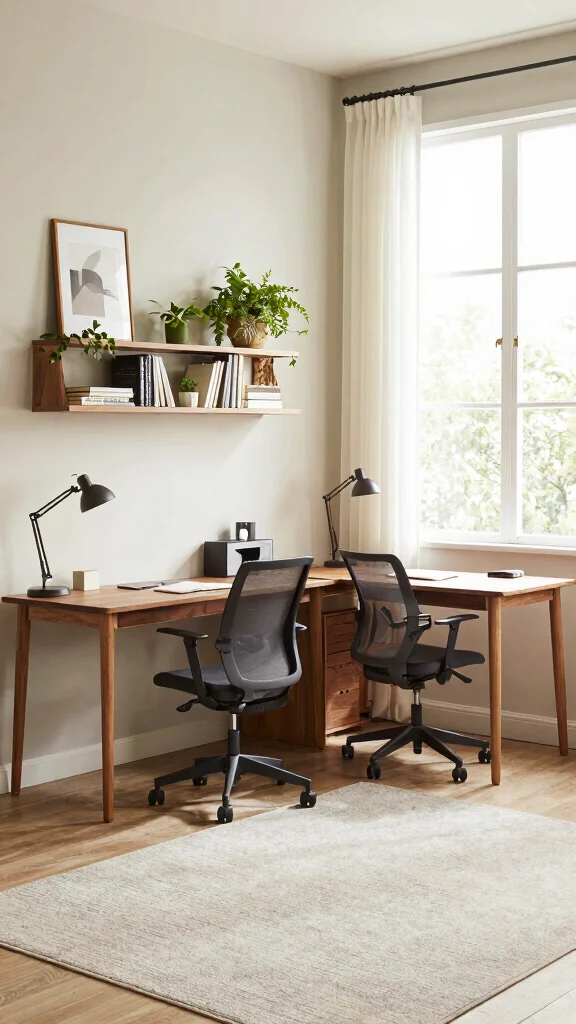
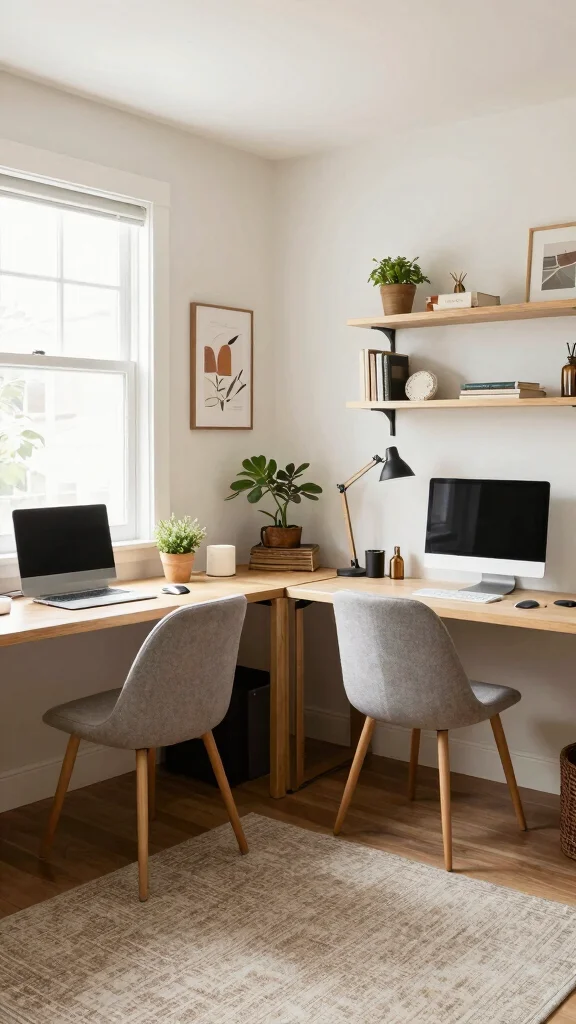
A dual desk setup can transform your workspace into a collaborative haven. This arrangement allows both individuals to have their own space while still feeling connected. By positioning two desks either facing each other or side by side, you create an environment that supports teamwork without sacrificing personal comfort. Pairing different desk styles can also reflect personal tastes, while a shared wall-mounted shelf keeps essentials organized and within reach.
To make this setup work practically, consider using desks that suit your design style—whether sleek modern or warm rustic. Ensure there’s ample space between desks for easy movement, and add task lighting to enhance focus and productivity. You can find budget-friendly desk options at thrift stores or online marketplaces.
Here are some tips for optimizing your dual desk setup:
– Choose desks that complement each other’s style.
– Ensure enough space for easy movement.
– Incorporate task lighting for focused work.
– Use matching accessories to unify the look.
– Personalize each desk with unique decor items.
With a dual desk setup, you create a workspace that fosters collaboration while also respecting individual needs, making it a perfect blend of functionality and style.
2. Cozy Nook Spaces
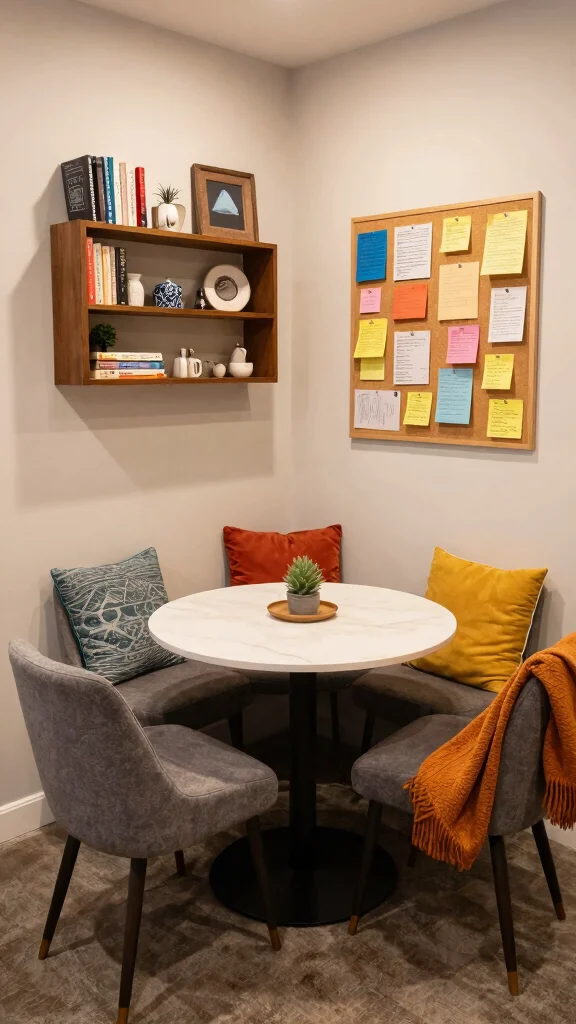
Transform an unused corner into a cozy nook that invites creativity and conversation. This charming workspace can be easily set up with a small table and two comfortable chairs, perfect for casual brainstorming or informal meetings. Adding a bulletin board keeps ideas and notes visible, creating an inspiring atmosphere.
To craft this cozy nook, opt for a round table to maximize space and choose chairs that blend comfort with style. Layer in cushions and throws to enhance coziness, and incorporate wall shelves for added storage or decorative touches. A nearby coffee station can further encourage a productive vibe.
Here’s how to create your cozy nook:
– Use a round table to save space.
– Choose stylish yet comfortable chairs.
– Add cushions and throws for warmth.
– Incorporate wall shelves for decor and storage.
– Keep a coffee station nearby for motivation.
This cozy nook not only serves as a retreat from more structured work areas but also encourages spontaneous collaboration and interaction.
3. Collaborative Wall Space
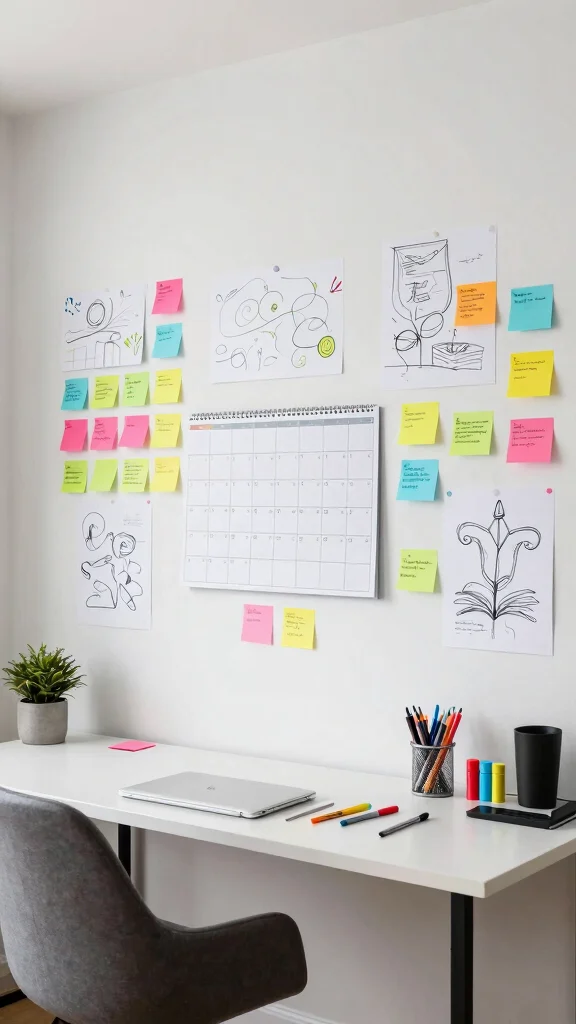
Designate a wall in your office as a collaborative space to enhance communication and creativity. This could be a whiteboard, chalkboard, or large corkboard where ideas, documents, and inspirations can be visually shared. This feature allows both individuals to contribute and interact dynamically.
To make the most of your collaborative wall, use different colored markers or pins to categorize ideas, regularly updating the content to keep it fresh and engaging. Ensure that it’s easily accessible for both users, and consider creating sections for brainstorming and project tracking.
Here are some tips for your collaborative wall:
– Use colored markers or pins for organization.
– Regularly update the content for freshness.
– Ensure easy access for both individuals.
– Create sections for brainstorming and reminders.
– Add a monthly planner for tracking deadlines.
This collaborative wall space not only boosts teamwork but also creates an engaging environment that keeps everyone aligned and inspired.
4. Adjustable Height Desks
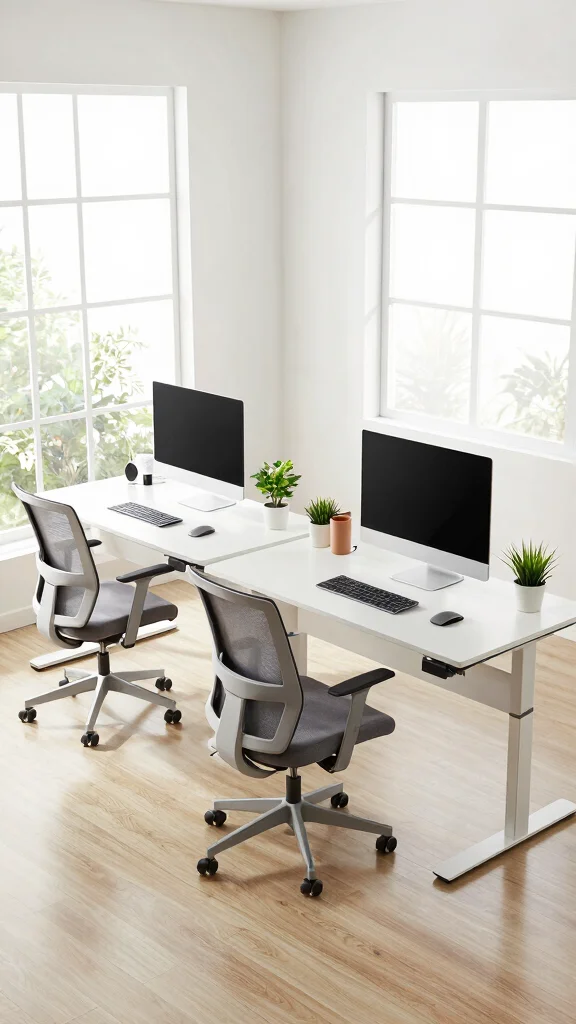
Incorporating adjustable height desks can greatly enhance comfort and productivity in a shared workspace. These desks promote better posture and allow each individual to work in their preferred position. Alternating between sitting and standing reduces fatigue and boosts energy levels.
To effectively utilize adjustable desks, set reminders to change positions regularly and use anti-fatigue mats for added comfort while standing. Keep frequently used items within reach to minimize unnecessary stretching. Personalize each desk with ergonomic accessories tailored to your needs.
Here’s how to optimize your adjustable desk setup:
– Set a timer to remind you to switch positions.
– Use anti-fatigue mats for standing comfort.
– Keep essentials within arm’s reach.
– Personalize with ergonomic accessories.
– Consider a shared calendar for desk usage.
By integrating adjustable height desks, you create a flexible workspace that not only boosts productivity but also supports a healthier work routine.
5. Shared Storage Solutions
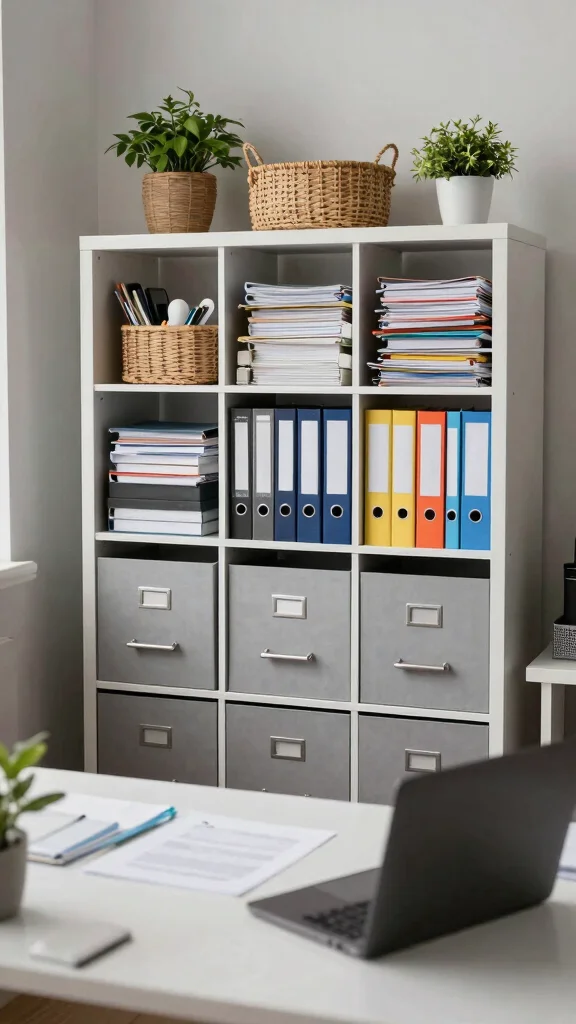
Storage solutions can be a challenge in a shared home office, but shared storage solutions can keep your workspace organized and clutter-free. Opt for a combination of cabinets, shelves, and filing systems that both individuals can access easily.
Consider using clear bins for visibility and labeling storage areas to avoid confusion. Vertical storage options can maximize space, while a designated filing cabinet helps keep important documents organized.
Here are some ideas to streamline your shared storage:
– Use clear bins for easy visibility.
– Label storage areas to avoid mix-ups.
– Incorporate vertical storage to save space.
– Designate a shared filing cabinet for documents.
– Utilize drawer dividers for personal items.
With the right storage solutions, you can create a harmonious workspace that allows both individuals to easily find what they need.
6. Light and Bright Aesthetics
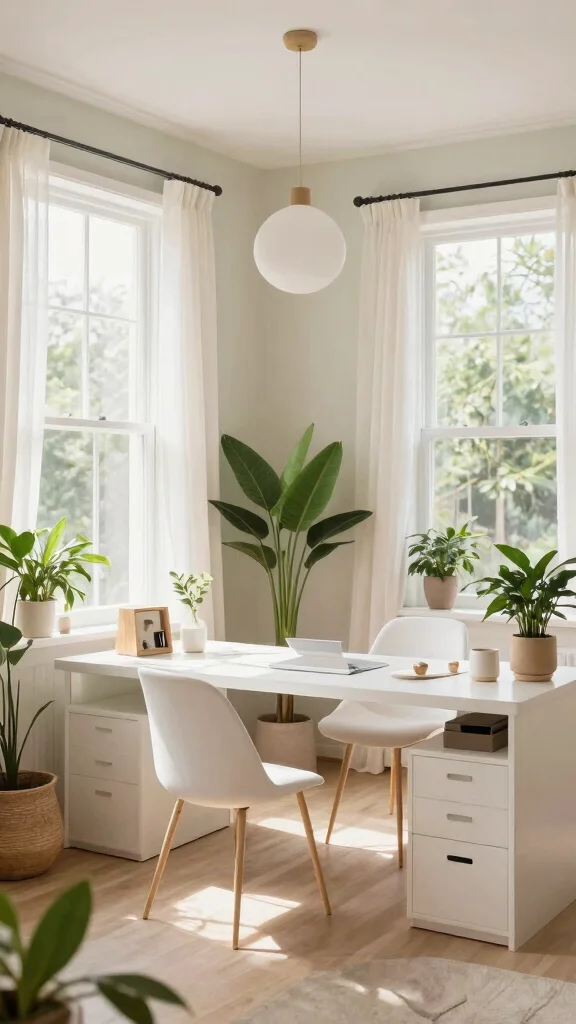
Creating a light and bright aesthetic can significantly uplift the mood of a shared office. Utilizing light colors on walls and furniture makes the space feel open and inviting. Incorporate ample natural light and mirrors to reflect brightness throughout the room.
To achieve this aesthetic, choose soft pastels or whites for walls and light wood tones for furniture, maintaining a fresh atmosphere. Sheer curtains can filter light beautifully, while stylish light fixtures enhance functionality. Adding plants can also introduce a touch of nature.
Here are tips for achieving a light and bright workspace:
– Choose soft pastels or white for walls.
– Use light wood tones for furniture.
– Add sheer curtains for natural light.
– Incorporate stylish, functional light fixtures.
– Use plants to add freshness.
A light and bright aesthetic not only looks appealing but also fosters an atmosphere that encourages productivity and creativity.
How To Choose Home Office Furniture Solutions for Two
1. Size Matters
When setting up a home office for two, the size of your furniture is crucial. Measure your workspace to ensure that the desks, chairs, and storage units fit comfortably without overcrowding the area. Aim for at least 60-80 inches of combined desk space for two people. This way, you both have enough room to work without feeling cramped.
2. Functionality
Consider how you and your partner work. Do you both need separate desks, or can you share a larger workspace? Look for dual office setup options that provide versatile features, like adjustable height desks or desks with built-in storage. Make sure the furniture suits your work styles, whether it’s for typing, drawing, or making calls.
3. Style and Aesthetics
The design of your office furniture should reflect your personal tastes while maintaining a cohesive look. Choose colors and materials that complement your home decor to create a pleasant environment. A light and bright aesthetic can help stimulate creativity, while cozy nook spaces can make it feel more inviting.
4. Comfort and Ergonomics
Comfort is key in a shared workspace. Look for ergonomic chairs that provide support during long hours of work. Adjustable features are a plus, as they allow both users to customize their seating. Remember, a comfortable workspace can boost productivity and reduce fatigue.
5. Storage Solutions
Shared workspaces can easily become cluttered. Incorporate shared storage solutions, such as shelving units or filing cabinets, to keep everything organized. Consider multi-functional furniture like ottomans with storage or desks with built-in drawers. This helps maximize your space while ensuring everything is easily accessible.
6. Budget Considerations
Set a budget that works for both of you before purchasing furniture. There are plenty of affordable options that provide good quality without breaking the bank. Do some research to compare prices and look for sales or second-hand items. Investing in durable furniture is wise, as this can save you money in the long run.
Pro Tip: Before buying, try out the furniture in-store if possible. Sit in the chairs and see how the desks feel. Comfort and functionality can make all the difference in a shared home office setup!
7. Personal Touches
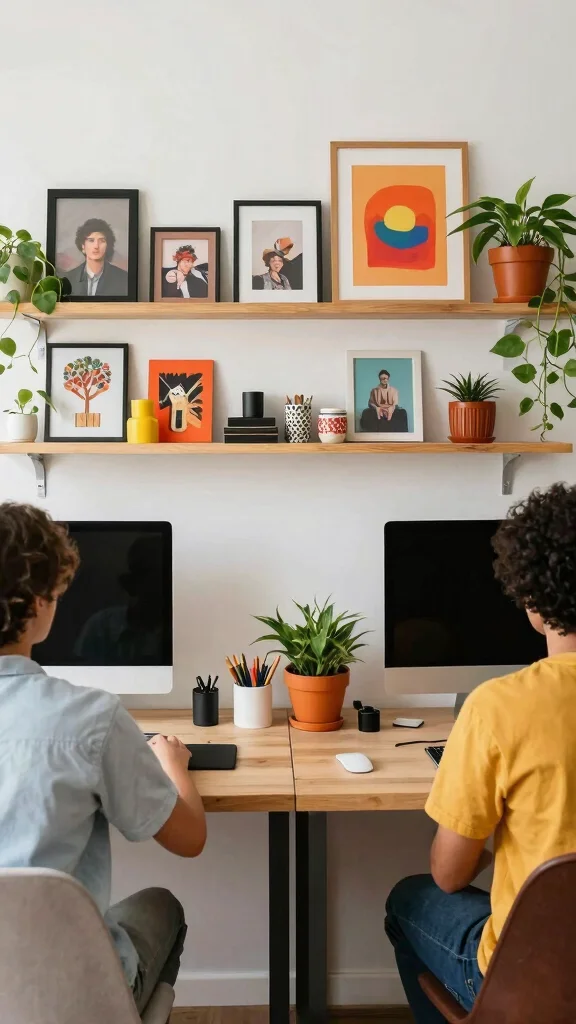
Infusing your home office with personal touches makes the space feel inviting and uniquely yours. Encourage both individuals to showcase personal items that inspire them, such as art, photographs, or travel souvenirs. This not only fosters creativity but also enhances the enjoyment of the workspace.
To personalize your office, create a vision board that highlights individual goals, and hang framed art that resonates with both users. Colorful desk accessories can reflect unique styles, while family photos or mementos evoke positive memories.
Here are some ideas for adding personal touches:
– Create a vision board with goals and inspirations.
– Hang framed art that resonates with both.
– Use colorful desk accessories for style.
– Incorporate family photos for warmth.
– Designate a space for individual expressions.
Personal touches can transform your workspace from merely functional to a vibrant reflection of your personalities.
A successful home office for two thrives on personal touches: swap stories, share color, and display items that spark each other’s creativity. Start a simple vision board and hang framed art that resonates with both of you; small, intentional details go a long way.
8. Divide and Conquer with Room Dividers
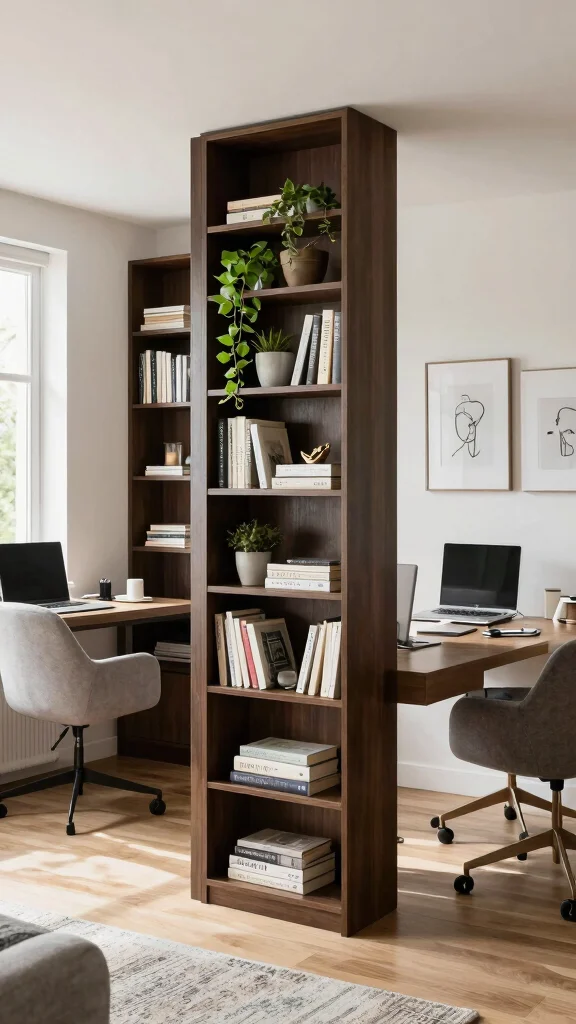
If your space allows, using room dividers can create a sense of separation in a shared home office. Dividers help define personal work zones while maintaining an open feel. You can choose decorative screens, bookshelves, or even curtains to create boundaries that suit both individuals.
For effective use of dividers, opt for lightweight, movable options that offer flexibility. Shelving dividers maximize storage while providing separation, and curtains can offer a cozy feel that can be drawn open or closed. Ensure that dividers allow natural light to flow into the workspace.
Here are tips for using room dividers effectively:
– Choose lightweight, movable dividers for flexibility.
– Use shelving dividers for storage and separation.
– Consider curtains for a soft, cozy feel.
– Select attractive designs that match your decor.
– Ensure dividers don’t block natural light.
By incorporating room dividers, you create an environment that respects individual privacy while still encouraging collaboration.
9. Flexible Furniture Choices
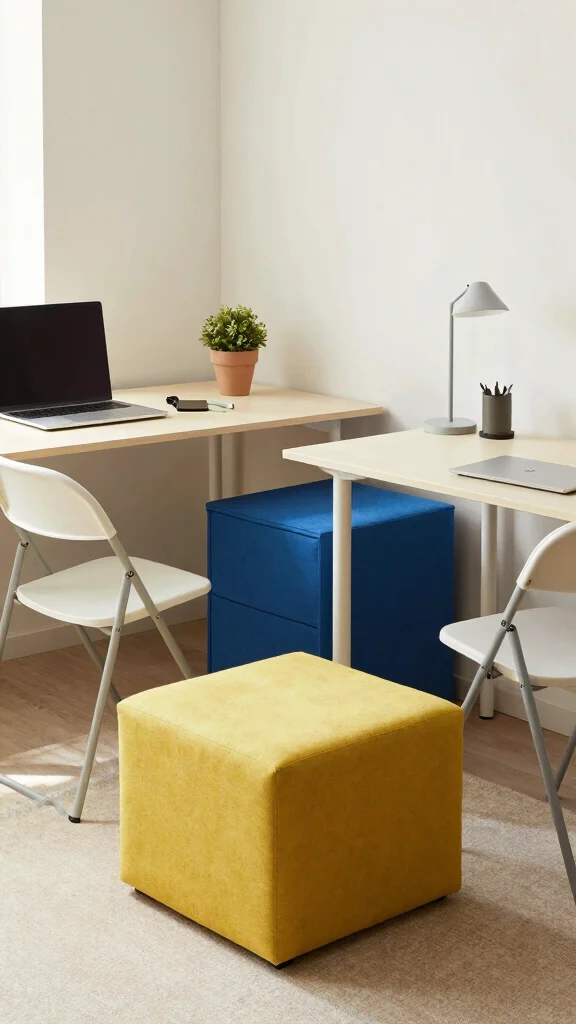
In a shared workspace, flexible furniture choices are essential for maximizing comfort and functionality. Invest in furniture that can adapt to your needs, such as folding tables for extra workspace or portable chairs that can be stored away.
To make flexible furniture work for you, choose modular options that can be easily reconfigured, and incorporate multi-purpose items like storage ottomans. Lightweight tables and chairs should be easy to move, and collapsible desks can provide extra setups as needed.
Here are some tips for selecting flexible furniture:
– Choose modular furniture for easy reconfiguration.
– Incorporate multi-purpose items for versatility.
– Opt for lightweight pieces that are easy to move.
– Consider collapsible desks for extra setups.
– Ensure furniture complements your overall decor.
Flexible furniture promotes a dynamic environment, accommodating whatever projects come your way.
10. Tech Integration
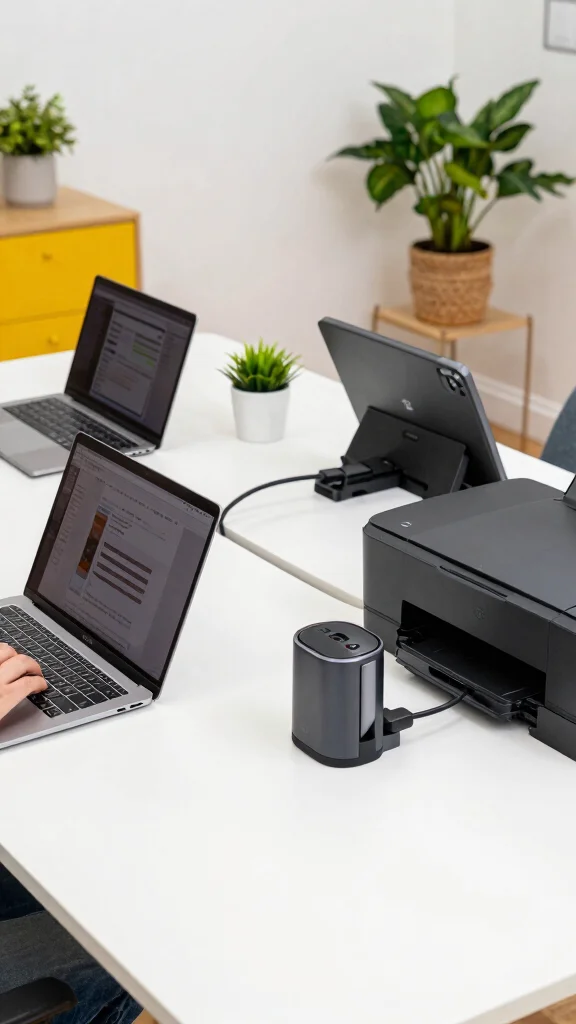
In today’s tech-driven world, tech integration is vital for any shared workspace. Ensure both individuals have access to necessary technology to stay productive and organized. Implementing cable management solutions keeps the area neat, while a shared charging station can be a lifesaver.
To optimize tech in your office, use wireless devices to minimize clutter and invest in a high-quality printer that meets both needs. Establish a shared cloud storage system for easy access to documents and utilize cable organizers to keep cords tidy.
Here are some tips for effective tech integration:
– Use wireless devices to reduce clutter.
– Invest in a good-quality printer for shared use.
– Set up shared cloud storage for easy access.
– Use cable organizers to keep cords tidy.
– Ensure strong Wi-Fi for multiple users.
By integrating technology seamlessly, you create a workspace that enhances collaboration while minimizing distractions.
11. Color Coordination
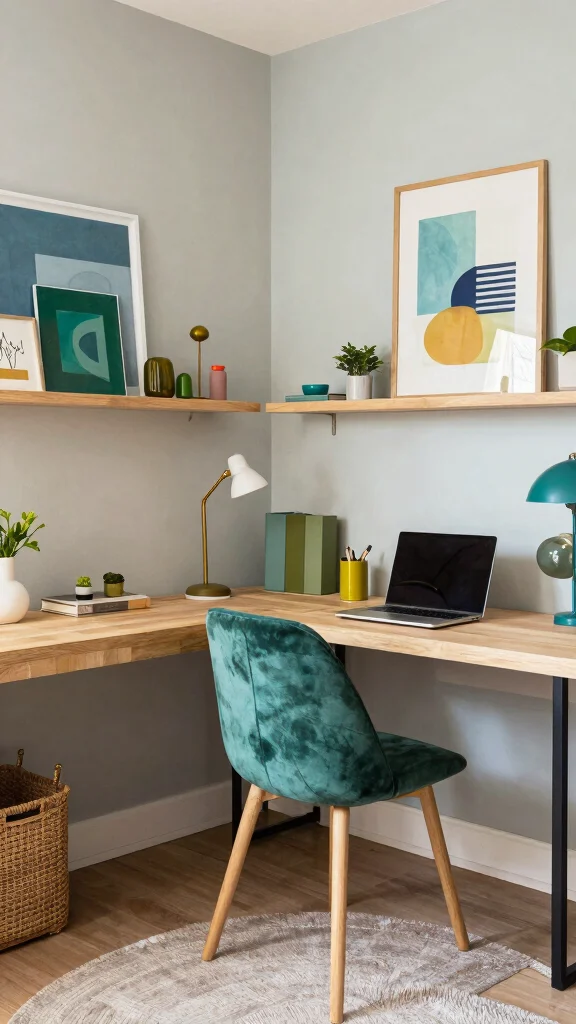
A well-coordinated color palette can bring harmony to a shared workspace. Using a cohesive color scheme creates a sense of togetherness while allowing each individual to express their style. Focus on selecting complementary colors for walls, furniture, and accessories.
To achieve color coordination, choose a few main colors and use various shades for depth, while neutral tones can balance out brighter accents. Incorporate colored accessories that reflect personal styles, and use art pieces that tie into the color scheme for added interest.
Here are some tips for effective color coordination:
– Select a few main colors with varying shades.
– Use neutral tones as a base.
– Incorporate colored accessories that reflect personalities.
– Use art that ties in the color scheme.
– Regularly evaluate the color scheme to keep it fresh.
By focusing on color coordination, you create a visually appealing and inviting workspace that inspires creativity.
12. Inspirational Decor
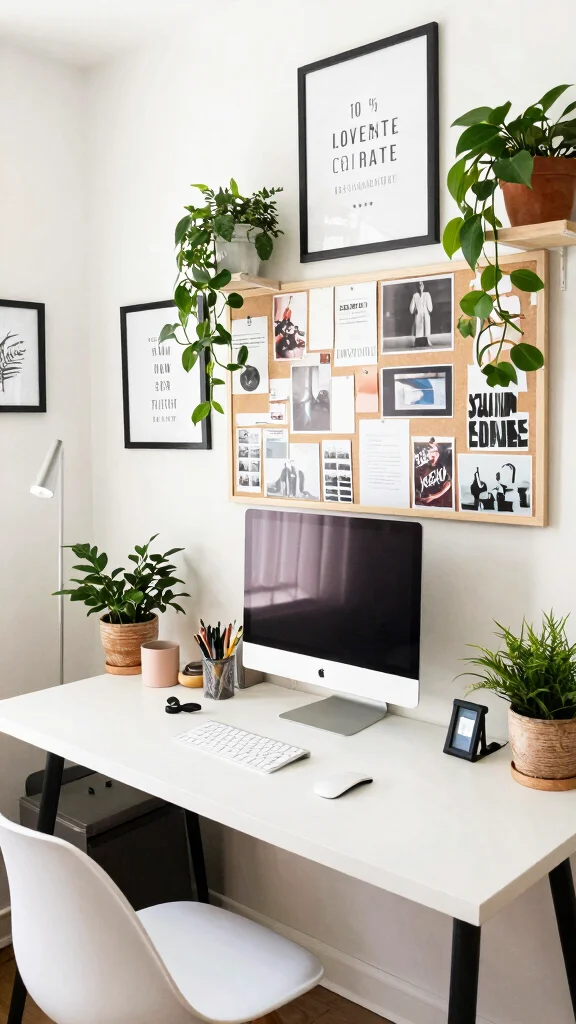
Nothing sparks creativity like inspirational decor in a shared workspace. Incorporating motivational quotes, vision boards, or artwork can elevate the mood and keep both individuals focused on their goals. Select decor that resonates with both people’s aspirations for maximum impact.
To enhance the workspace, display quotes in stylish frames or as wall art, and create a vision board filled with images and words that inspire you both. Adding plants can introduce freshness and liveliness to the environment.
Here are some tips for selecting inspirational decor:
– Choose decor that aligns with both individuals’ aspirations.
– Display quotes in stylish frames.
– Create a joint vision board for inspiration.
– Incorporate plants for added freshness.
– Rotate decor periodically for a refreshed vibe.
Incorporating inspirational decor beautifies your workspace while cultivating a positive atmosphere that encourages collaboration and goal achievement.
13. Breakout Areas
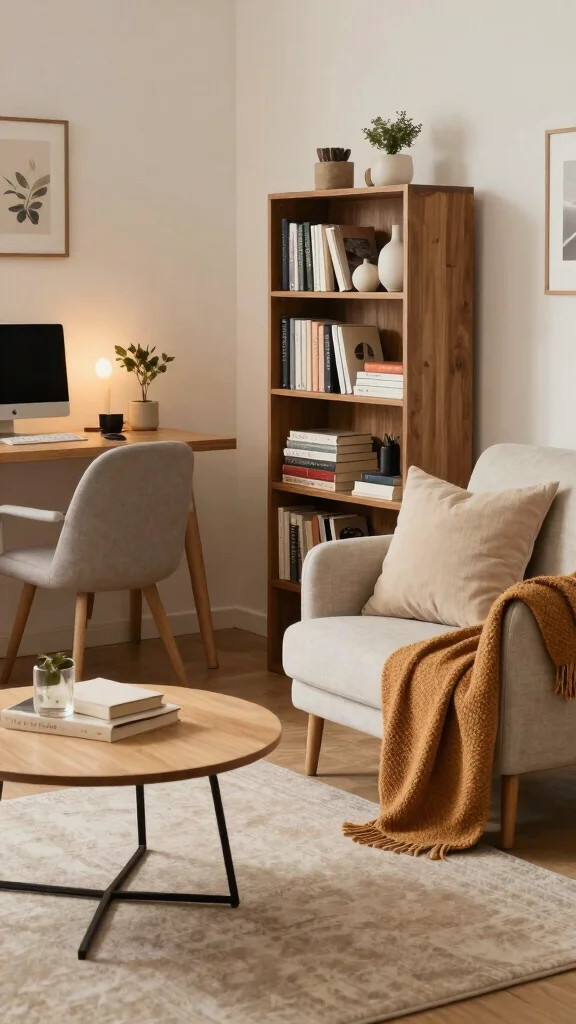
Sometimes, stepping away from the desk can lead to breakthroughs. Creating breakout areas in your home office promotes creativity and relaxation. These spaces can be as simple as a couple of comfy chairs or a small sofa in a corner, serving as a retreat from work.
To optimize a breakout area, use soft seating for comfort and include a coffee table for casual meetings or brainstorming sessions. Calming elements like a small water feature or artwork can enhance the atmosphere, while keeping this area separate from work desks encourages mental shifts.
Here are some tips for designing your breakout area:
– Use soft seating for maximum comfort.
– Include a coffee table for collaborative work.
– Incorporate calming elements like art.
– Keep this area separate from workstations.
– Consider adding a bookshelf for a cozy reading nook.
Having a designated breakout area allows for natural breaks, enhancing overall productivity and creativity.
14. Themed Workspaces
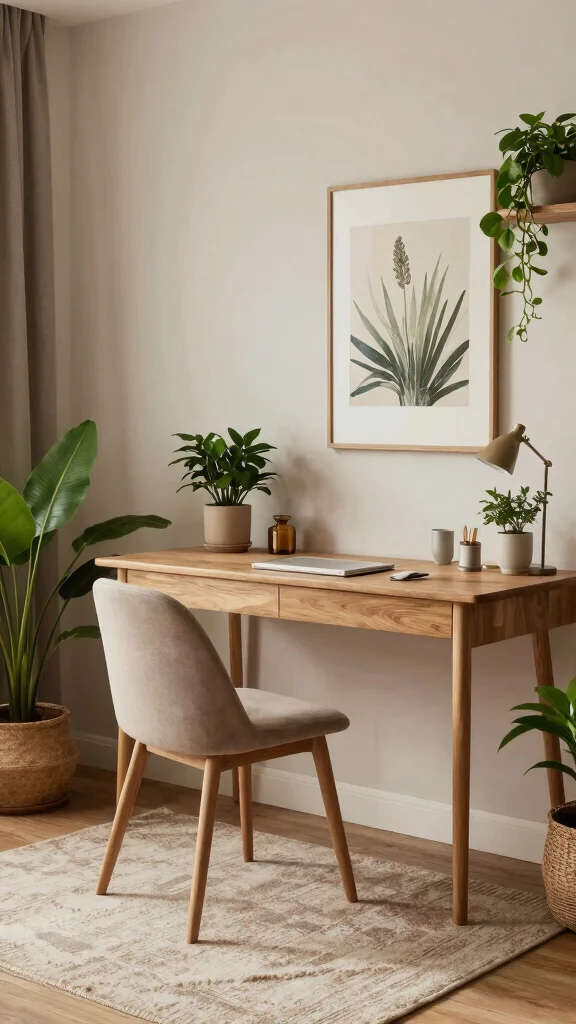
Creating a themed workspace adds a touch of fun and personality to a shared office. Choose a theme that resonates with both individuals, like a nature-inspired space or a minimalist aesthetic, and incorporate decor, colors, and furniture that reflect this theme.
To design a themed workspace, select a color palette that embodies your theme, and incorporate themed decor items such as wall art or plants. Choose furniture that complements the theme, like rustic wood for a nature vibe, and consider scents that resonate with the theme, such as fresh flowers for a garden feel.
Here are some tips for creating a themed workspace:
– Select a color palette that embodies your theme.
– Incorporate themed decor items for visual interest.
– Choose furniture that aligns with the theme.
– Consider scents that enhance the theme.
– Keep decor cohesive to inspire creativity.
By choosing a theme, you create a cohesive environment that inspires collaboration and creativity.
15. Sound Management
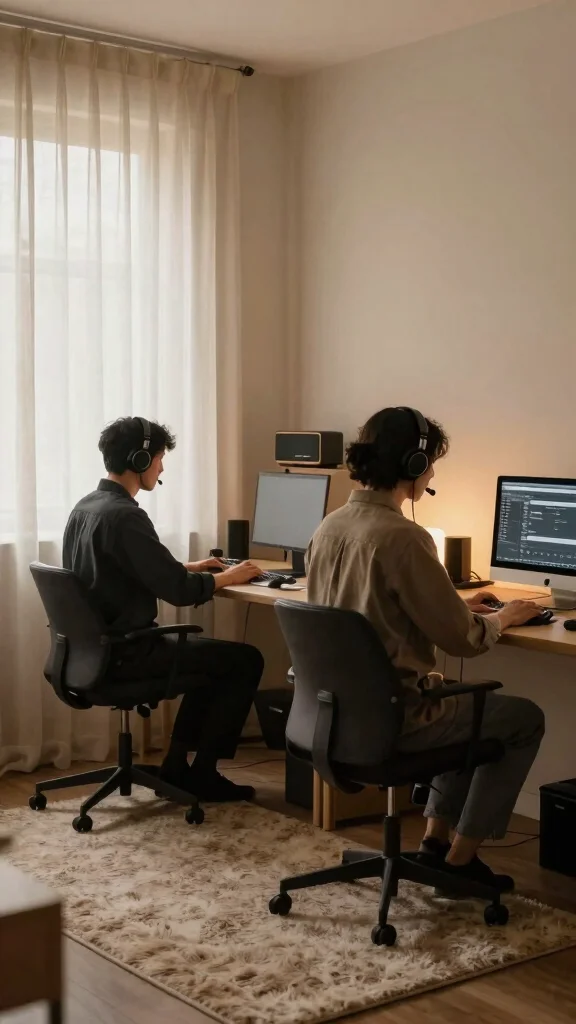
Managing sound in a shared workspace is essential for maintaining productivity. Consider using soundproofing elements to minimize distractions or incorporating calming background sounds to enhance focus.
To effectively manage sound, use noise-canceling headphones during work hours, and incorporate rugs or curtains to absorb sound. Playing soft music or nature sounds can create a calming atmosphere, while establishing ‘quiet hours’ encourages focused work time.
Here are some strategies for effective sound management:
– Use noise-canceling headphones for concentration.
– Incorporate rugs or curtains to absorb sound.
– Play soft music or nature sounds for calm.
– Establish ‘quiet hours’ for focused work.
– Encourage open communication about sound preferences.
By effectively managing sound, you create a workspace that promotes concentration and collaboration.
16. Utilize Technology for Organization
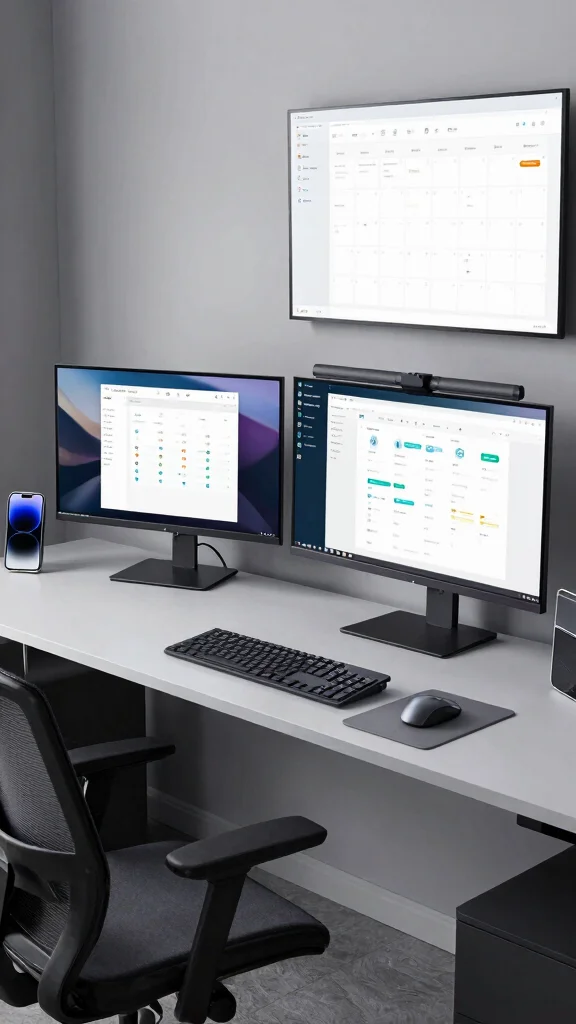
Modern technology can greatly improve home office organization. Utilize apps and tools for project management, scheduling, and communication to enhance efficiency.
To stay organized, use digital note-taking apps to keep ideas tidy, and implement project management software to track tasks and deadlines. Schedule shared calendars for meetings and deadlines, and utilize cloud storage for easy access to documents.
Here are some recommendations for leveraging technology:
– Use digital note-taking apps for organization.
– Implement project management software for task tracking.
– Schedule shared calendars for meetings.
– Utilize cloud storage for document access.
– Experiment with productivity tools that suit your needs.
By leveraging technology for organization, you streamline workflows and keep both team members aligned and informed.
Fun fact: teams that use shared calendars and project management apps cut missed deadlines by up to 30%. Keep ideas tidy with digital notes, and watch your home office for two become twice as efficient. Embrace cloud storage and quick check-ins to stay in sync.
17. Flexibility with Shared Responsibilities
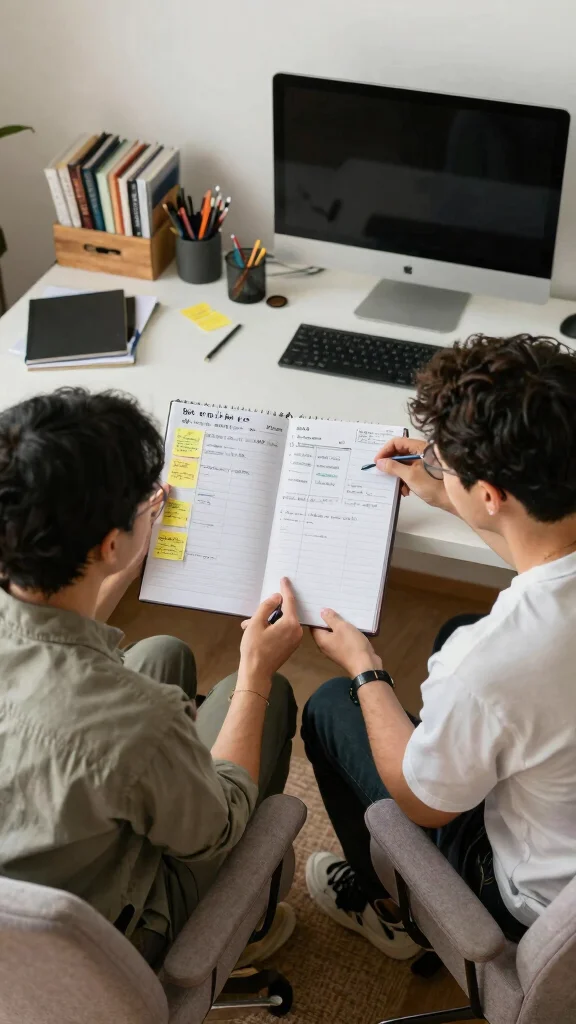
Sharing a workspace means sharing responsibilities too. Establishing flexible roles in the home office can enhance collaboration and create a more enjoyable environment.
To create a shared responsibility system, set clear expectations for task sharing and deadlines. Rotating responsibilities periodically keeps things fresh, while a communal planner can help track who’s responsible for what. Regular check-ins can facilitate open communication about progress and challenges.
Here are some tips for establishing shared responsibilities:
– Set clear expectations for task sharing.
– Rotate responsibilities to keep things interesting.
– Use a communal planner for accountability.
– Establish weekly check-ins for progress updates.
– Encourage open communication about roles.
Flexibility in shared responsibilities fosters teamwork and camaraderie, making the workspace more enjoyable for everyone.
18. Flexible Meeting Spaces
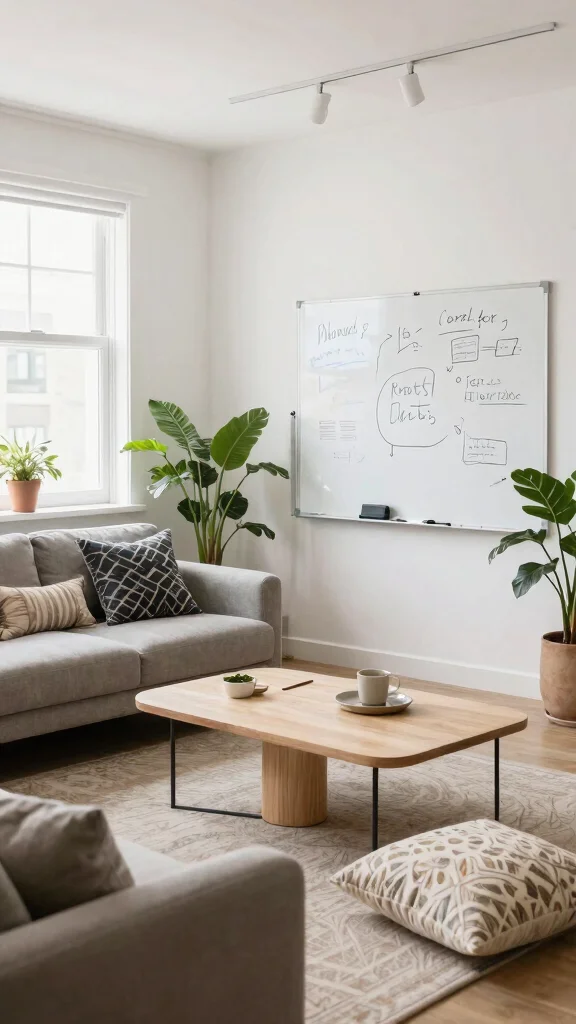
Designing a flexible meeting space within your home office can greatly enhance collaboration. This area doesn’t have to be large; a designated spot with comfortable seating can serve this purpose effectively.
To optimize a flexible meeting space, use movable furniture to adapt to varying needs, and create a small seating area with comfortable chairs and a low table. Including a whiteboard or flip chart for brainstorming can add functionality, and make sure it’s separate yet accessible from individual work zones.
Here are some tips for creating a flexible meeting space:
– Use movable furniture for adaptability.
– Create a small seating area for discussions.
– Incorporate a whiteboard for brainstorming.
– Keep it separate yet accessible.
– Add cozy decor elements for warmth.
By including a flexible meeting space, you facilitate open discussions and idea sharing, making your home office more functional and engaging.
Having a flexible meeting space in your home office for two isn’t about a big room—it’s about smart setup. Use movable furniture, a cozy seating area, and a whiteboard to switch layouts in minutes and boost collaboration.
Conclusion
Creating a home office for two can be a rewarding project that blends functionality with style.
By incorporating these 18 ideas, you can craft a workspace that enhances productivity while reflecting both individuals’ personalities.
The right design will help maintain harmony and collaboration, making remote work a pleasant experience for everyone involved.
Related Topics
home office for two
shared workspace design
dual office setup
home office organization
collaborative workspaces
small space solutions
functional furniture
minimalist design
workspace productivity
budget friendly
easy organization
DIY home office