
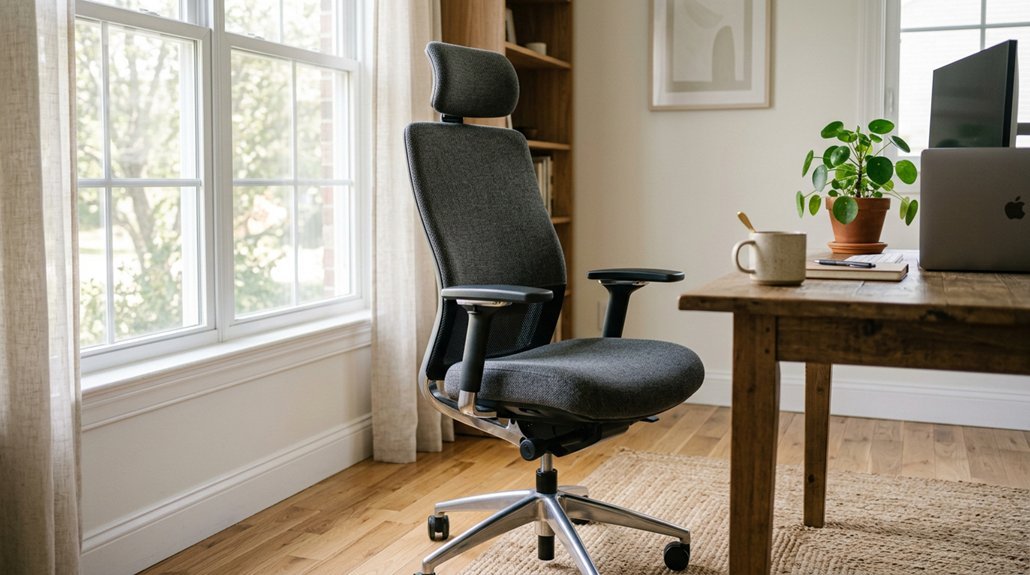


You need a chair that won’t wreck your back or your budget. The trick is knowing which features actually matter: adjustable lumbar support, breathable mesh, and armrests that move with you. Most chairs under $200 cut corners somewhere, so you’ll want to spot the traps before you buy. The good news? Solid options exist if you match the chair to your body and work style. Here’s what to look for, and where five popular picks shine or fall short.
5 Traps That Waste Your $200 Chair Budget
When you’re shopping with a $200 limit, it’s easy to blow your cash on the wrong things. Don’t fall for feature overload: an “18-way adjustable” chair often hides weak support behind gimmicks. Focus on what matters, lumbar height, armrest height, seat depth, and recline locking.
Skip the racing-style gaming look. Those fixed lumbar pillows and synthetic leather trap heat. A breathable mesh back beats them for long work sessions.
Ignore big brand names. Higher prices often mean bigger ad budgets, not better materials. Check actual certifications and real user reviews instead.
Watch your size. “One size fits all” fails if you’re over 6 feet. Verify seat height, depth, and lumbar range match your body.
Avoid cheap PU leather. It cracks fast and breathes poorly, killing comfort before ergonomic benefits kick in. Try again later if you hit a configuration error, traffic or a configuration issue blocks your research. Smart checking now will help prevent this error.
Recommended Products

Fully Adjustable Office Chair: Customized chairs, featuring with an adjustable 2D headrest, backrest with 90° to 120° recline, and 3D adjustable armrests for multiple work postures at will and discover unparalleled comfort throughout the workday.

All-Day Ease – Breathable mesh backrest provides targeted lower back support, encouraging healthy posture and lasting comfort through long hours of sitting.

【Ergonomic Office Chair】The Nexthro ergonomic office chair is designed to alleviate back pain, offering a comfortable seating experience. It features adjustable lumbar support to help maintain a natural sitting posture, ensuring comfort even during extended use. The wide seat (20.9" wide x 20.7" deep) helps distribute weight evenly and is suitable for individuals approximately 5'4" to 6'3" tall
Must-Have Features in Chairs Under $200
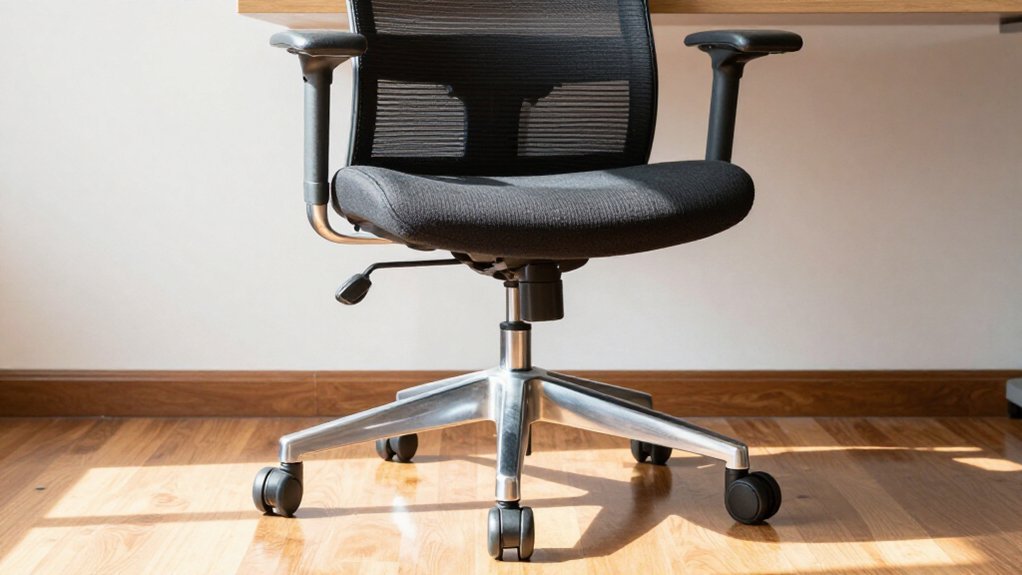
Your lower back curves naturally at the L3–L4 spot, just above your belt line. You need adjustable lumbar support that slides to hit that exact curve, so you feel direct contact with no gaps when seated fully back.
To troubleshoot and help prevent discomfort, pick breathable mesh backs that cut heat buildup during long sits. Choose high-density seat foam, not the cheap stuff that flattens within months. Check that armrests adjust for a relaxed 90° elbow angle, ideally moving up, down, and sideways to spare your shoulders.
Reviewing the CloudFront of options online won’t reveal fit issues. Error by reviewing specs alone: verify seat depth stays under 17” if you’re under 54″ tall, and confirm lumbar range works for 54–60″ users. We provide content to customers that prioritizes fit over flashy labels.
Recommended Products

Breathable Mesh Back – Durable, elastic mesh provides airflow and light support for balanced, all-day comfort, keeping the back cool during extended use.
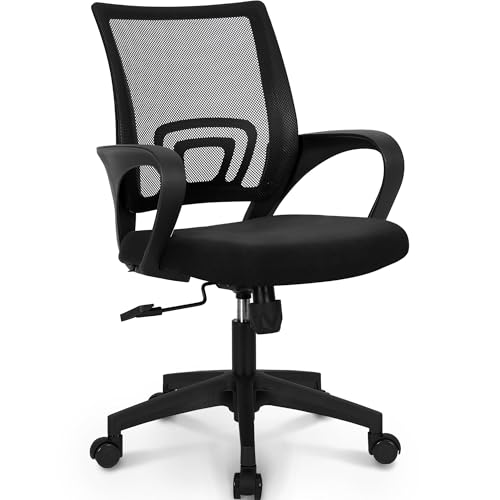
Ergonomic Backrest – High-quality breathable mesh provides airflow while integrated lumbar support promotes healthy posture and lasting all-day comfort.
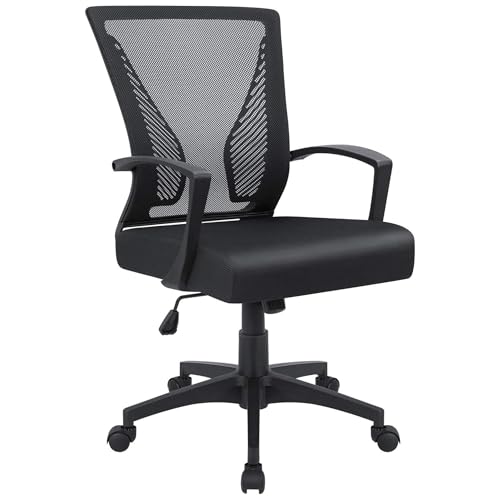
Ergonomic Design: The overall design of this office chair is ergonomic, two lumbar supports on the backside of the chair back are not only for beautiful looking, when you lean in the chair, it feels comfortable like two hands are supporting your waist, with a slightly concave design on the cushion, this chair can effectively relieve the back pain that caused by long hours of sitting, this will be a very wonderful experience for your use
Match Your Chair to Work Style and Body Type
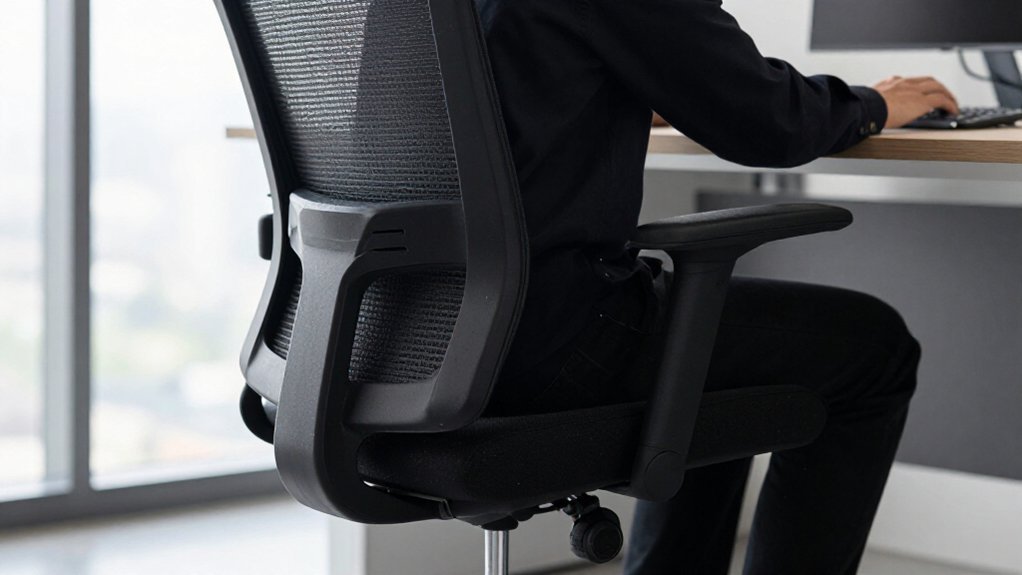
How do you pick a chair that actually fits *you*? Start with your height. If you’re under 5’4″, check that seat depth stays under 17 inches, or grab adjustable depth so your thighs stay comfy without pressure behind the knees. Between 5’4″ and 5’10”? Prioritize lumbar support that moves through its full range to hit your L3–L4 curve. Over 6′? Verify maximum seat height and backrest height keep your thighs parallel to the floor. Over 200 pounds? Look for weight-capacity certification and a reinforced, wider frame to prevent wobble or early wear. If you code or stare at screens all day, snag multi-directional armrests and an adjustable headrest to relax your shoulders and cut neck strain. When you connect to the server or visit the website at this time, you’ll reach customers through CloudFront. Reference your Request ID if issues pop up.
Recommended Products
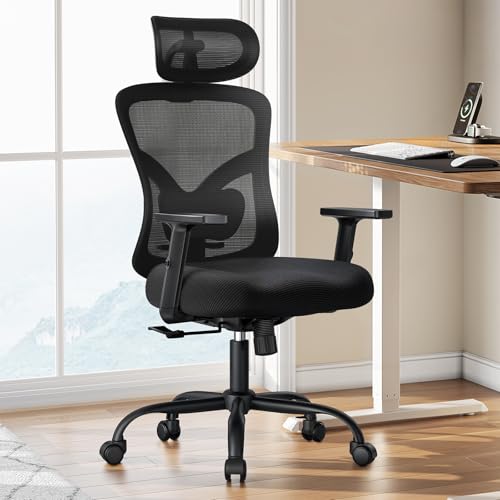
Adjustable Lumbar Support: This ergonomic office chair is designed to align with the natural curve of your spine. It features a 2.4″ height-adjustable range, offering targeted relief for the lower back. The soft, enhanced lumbar pad helps ease tension and alleviate fatigue.

【Adjustable Lumbar Support】- The lumbar support of MOLENTS office chair can be adjusted up and down, forward and backward to deliver tailored support for your lower back.

ERGONOMIC WORK CHAIR: The reliable office chair is purpose-built to encourage good posture. The backrest fits the shape of the human spine. In addition, it provides head/shoulder/back/ hips/ hands supporting points and proper lumbar support, thus reducing strain on your back, promoting proper posture, relieving the pressure on the buttocks. Ideal for home office, student study, executive work, reading and gaming scenarios.
Pre-Purchase Checklist: Size, Warranty, and Return Tests
Now that you’ve matched a chair to your body and work habits, it’s time to protect your purchase before you click “buy.” Shopping under $200 means you’re balancing budget and quality, so a quick checklist keeps you from getting stuck with a chair that wobbles, pinches, or just doesn’t fit through your doorway.
Protect your purchase before you click buy—balance budget and quality with a quick checklist to avoid wobbles, pinches, and doorway disasters.
Size First: Grab a tape measure. Check your height against seat depth, especially if you’re under 54″, tall, confirm it doesn’t exceed 17″. Measure your desk clearance too.
Warranty and Return Policy: Scan for real warranty coverage, not just vague promises. A solid return policy saves you if assembly goes wrong or parts arrive damaged. If customer service is hard to reach and you can’t find steps to troubleshoot, that’s a red flag. Nothing frustrates more than “we can’t connect” when you need help.
Your 30-Day Test: Sit fully back, test the lumbar support hits your L3-L4 area, and roll those casters on your actual floor.
Recommended Products

【MULTI-FUNCTIONAL ERGONONIC OFFICE CHAIR FOR WORK & RELAXATION】Designed to support long hours of sitting, this mesh office chair combines a breathable mesh structure, 3D adjustable headrest, adaptive armrests, retractable footrest, and reclining backrest to deliver all-day comfort for working, studying, or gaming.

[Ergonomic Support & All-Day Comfort]:Experience full-body support for your head, back, hips, and arms. The chair features customizable lumbar support and multiple adjustable parts—including seat height, headrest, 3D backrest, and flip-up armrests—to perfectly fit users from approximately 5'5" to 6'7". Designed to keep you comfortable and properly aligned even during long hours of sitting.

[Ergonomic Lumbar Support for Comfy] Our office chair's premium mesh lower split back support enhances airflow and thermal management while delivering pinpoint pressure alleviation to the waist area, providing targeted relief and reducing fatigue during long work hours. The detachable lumbar support can also adjust the support angle through a rotary knob.Whether you’re working, reading, gaming or binge-watching, your lower back stays supported.
Top Affordable Ergonomic Chairs by User Category
Because everyone sits differently, the best chair for you depends on how you’ll actually use it. Think about what you actually do all day, then match the chair to that need.
- Programmers and heavy users: Grab a chair with height/width/pivot 3D armrests. Your elbows stay at about 90 degrees, and your neck won’t jut forward during marathon typing.
- Students pulling long study sessions: Prioritize a breathable mesh back for airflow and high-density seat foam. Cheap foam flattens fast; you want something that lasts all semester.
- General office work: Pick adjustable lumbar support that slides up or down to hit your lower back, L3–L4, with a recline to 135 degrees or so.
Taller folks over six feet should check lumbar range and seat depth so thighs stay parallel, no slouching forward. Under $200, skip fake leather that cracks. Check real reviews and warranty terms before you buy.
Recommended Products
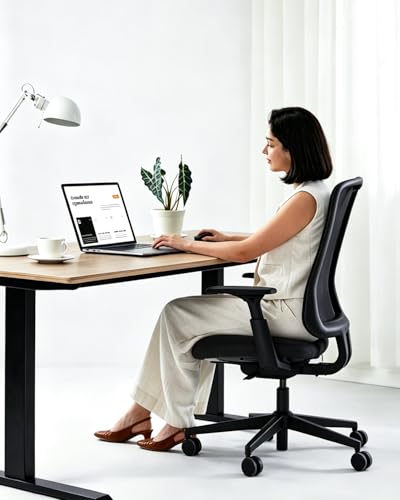
Beautiful Design Meets All-Day Comfort: Not just an ergonomic chair – a piece of home decor. With its sleek, minimalist silhouette and soft-touch fabric, Flexer blends perfectly into your home office, study, or bedroom. Enjoy the compliments while you work in style

Tailored Fit for Your Body Type: Designed for users 5'4"–6'0" and under 220 lbs – the EC200 chair is specifically calibrated for this body range to deliver a proper ergonomic fit

3.1-INCH ADJUSTABLE SEAT DEPTH: Slide the seat forward or backward to better match your leg length and improve thigh support. The adjustable seat depth helps users of different heights maintain comfortable clearance behind the knees.

I am Đinh Ai Nguyễn, a content writer at SoftAuraHome.com. For me, home is more than just a place to live. It is where we recover from long days, hold our quiet moments, and create the atmosphere that shapes how we feel. That belief is one of the biggest reasons I wanted to be part of this blog. I started writing about home decor because I have always been drawn to spaces that feel soft, peaceful, and emotionally grounding. I believe a calm room can do more than look beautiful. It can bring comfort, restore energy, and help people feel more connected to themselves and the life they are building. Through Soft Aura Home, I want to share ideas that are not only visually inspiring, but also meaningful in everyday life. With experience in SEO writing and niche content publishing, I understand how to create articles that are clear, useful, and easy to discover. But beyond strategy, I care deeply about how a piece of content makes someone feel. Every article I write is created with the hope of helping readers shape homes that feel gentle, personal, and full of quiet warmth.
Follow on Facebook