
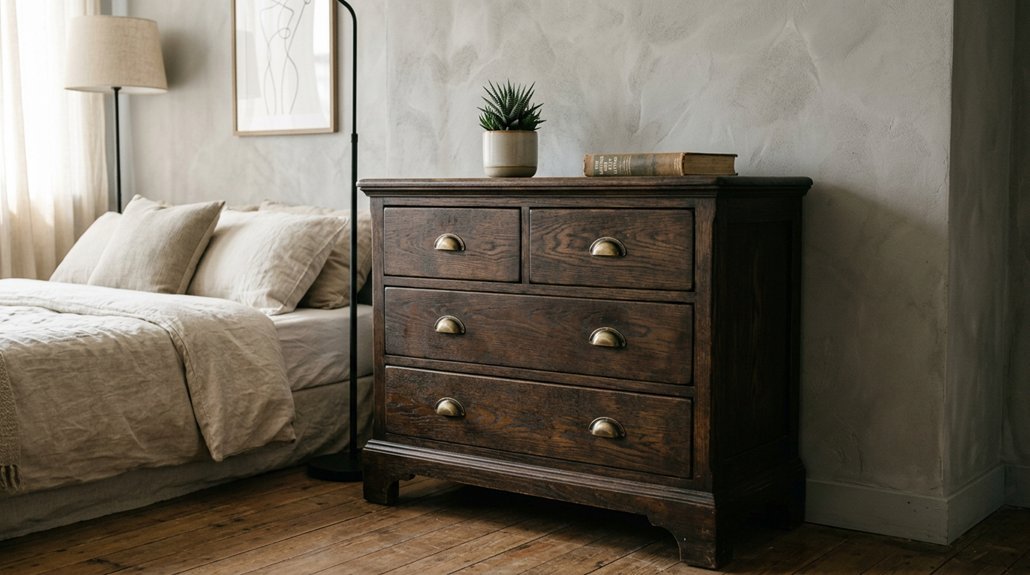


Your old college dresser barely fits your new closet, so you’re eyeing something slimmer. But wait, is a chest of drawers actually better for your space, or just different? Most shoppers mix these up until they haul one home and regret it. Here’s the straight truth: one choice wins on floor space, the other on top surface. Neither is wrong; it depends on what you actually need. Let’s figure out which one belongs in your bedroom.
Dresser vs. Chest of Drawers: How Shape Changes Everything
When you’re picking between a dresser and a chest of drawers, shape matters more than you might think. You’re choosing between two very different footprints.
The Chest of Drawers: Tall and Space-Smart
A Chest of Drawers is taller and narrower, usually standing 48–60 inches high. You get vertical storage space with stacked drawers reaching upward, not outward. This makes it perfect when you’re tight on floor space. You’ll sacrifice some surface area on top, but you gain a streamlined look that keeps rooms feeling open.
The Dresser: Wide and Versatile****
A Dresser sits lower and wider (30–36 inches tall, 40–60 inches wide). You spread out horizontally instead. Those storage drawers run longer and deeper, and you’ve got room on top for a mirror, lamp, or daily essentials. You trade wall height for usable surface area and flexible styling options.
Recommended Products

Ample Storage Space: This 5-drawer dresser provides generous storage for clothing, accessories, and household essentials, keeping everything neatly organized. The sturdy wood top offers reliable support for lamps, books, décor, and other daily items

【Narrow Dresser with Elegant Design】- The slim dresser stands out with its elegant design and excellent adaptability. Its sleek lines and stylish appearance not only add a touch of brightness to your home but also blend easily into various decorative styles. Whether in the bathroom, bedroom, toilet or other tight spaces, it can perfectly fit in and become a part of your home's aesthetics.

【Tall Dresser with Lightweight Design】- The dresser's lightweight design makes it easy to move and place in any corner. Whether in the bedroom, living room, or any other space, it blends in perfectly, bringing convenience to your life.
Storage Capacity: Drawer Count vs. Usable Volume
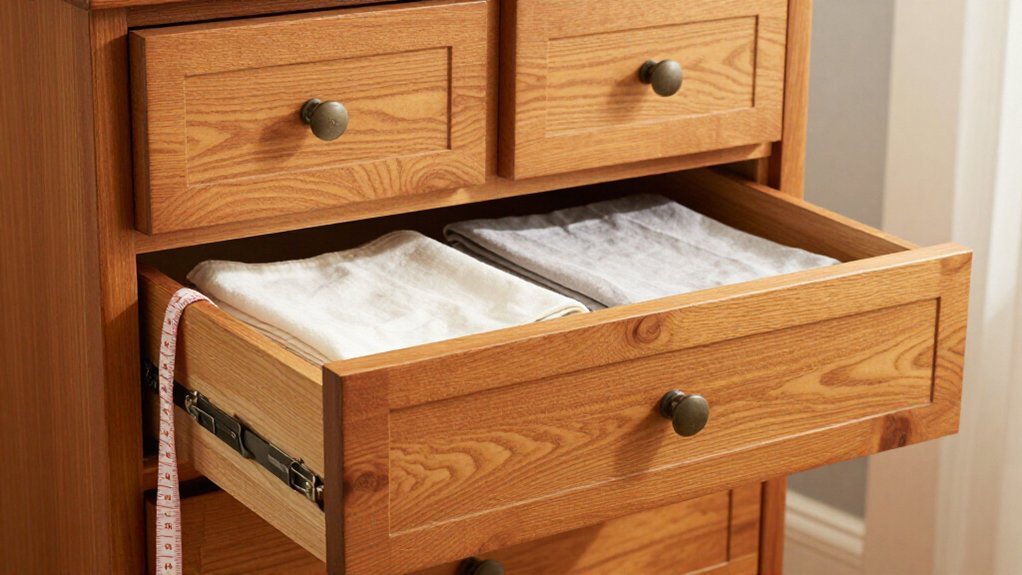
When you’re comparing storage, don’t just count drawers, look at how much you can actually fit inside them. Dressers usually give you more drawers overall, often 4 to 9, with those wide, deep drawers that swallow bulky sweaters and jeans whole. Chests typically stack 4 to 6 drawers in a taller, narrower frame, so while you might sacrifice some total space, you gain floor space and a smaller footprint.
Recommended Products

MATERIAL: 40 Pack cabinet handles Made of High-precision Quality Stainless Steel with beautiful looking, durable and strong, elegant addition to any home.

【9 Drawer Storage Dresser】 A 54 x 13.8 inch wide desktop paired with 9 deep fabric drawers that are 17.1 x 13.8 inches. This chest of drawers for the bedroom offers abundant storage. No more hunting around for lost clothes or digging through a mess of clutter. Each drawer's got plenty of space for your media collection, gaming gear, clothes, beddings, and all that good stuff. Huuger

Fusion That Delights: From the BELLAH Collection, this chest of drawers fuses steel, engineered wood, and non-woven fabric for a perfect blend of strength, softness, and storage. Pair it with bedside table for a cohesive space that feels just right
Drawer Quantity Analysis
When you compare storage capacity, drawer count tells only part of the story. Dressers typically offer 4 to 9 drawers, mixing horizontal drawers for bulky items with shorter rows for accessories. This setup gives you more sorting options for your bedroom storage. A Chest of drawers usually stacks 4 to 6 drawers vertically, which limits your compartments.
Your drawer volume depends on more than numbers. Dressers spread storage width-wise, so you gain usable space for separating tees, socks, and sweaters. Chests force broader categories into fewer stacked drawers. For the best storage capacity, weigh drawer count plus depth and drawer type together. That combination shows what you’ll actually fit.
Drawer Depth Comparison
How deep your drawers go changes everything about what you can actually store. When you’re comparing dressers and chests, drawer depth directly impacts your usable storage space without adding extra furniture.
Dressers typically win on depth, measuring 18–22 inches. That extra room lets bulky sweaters and folded clothing stack neatly. You’ll fit more items per drawer, even with fewer total compartments.
Chests prioritize vertical stacking with slimmer drawers, usually 4–6 levels high. They’re great for tight corners but limit how much you can pack into each tier.
Before buying bedroom furniture, grab your tape measure. A dresser’s two-foot depth devours floor space but rewards you with volume. A chest saves room yet sacrifices capacity. Match your drawer depth to your actual wardrobe, not just your wall space.
Your Bedroom Layout: Where Each Piece Fits Best
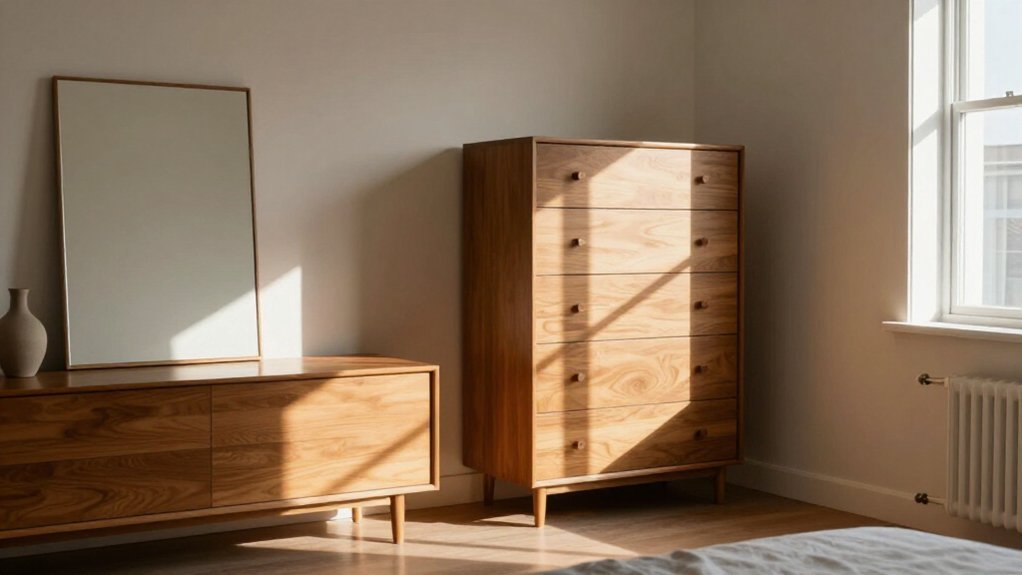
Because your bedroom’s size and shape matter just as much as your storage needs, picking the right furniture starts with knowing where each piece will actually fit.
Mapping Your Bedroom Layout
The primary difference comes down to space. Dressers are wider, stretching 40–60″ across, so you’ll want to place them along long walls or under windows where their low profile works best. They’re perfect when you’ve got floor space to spare.
Chests, tall and narrow at 30–40″ wide, squeeze into tighter corners. You maximize vertical space without eating up precious walkway room. For small bedrooms or condos, this stacked design keeps your storage needs met while maintaining flow.
Think about your daily movement: can you fully open drawers where you’re planning? That’s your guide.
Recommended Products
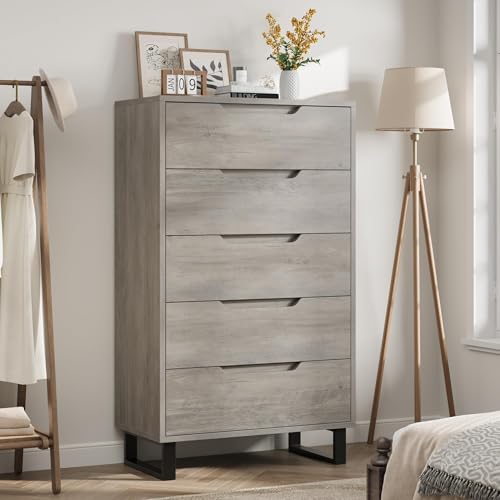
CHIC DESIGN: The legs of 5 dressers are detachable, which allows you to adjust the use according to your needs, maximizing its functionality. The space at the bottom of the cabinet behind the cabinet legs supports the passage of the sweeping robot, which is convenient for daily cleaning

Multifunction Tower: This fabric dresser for bedroom is ideal for wherever you want to keep clutter under control, such as bedrooms, playrooms, entryways; matches perfectly with other WLIVE storage organizers.

【🏠Ample Storage TV Stand】Measures 13.78"D x 62.99"W x 26.38"H, 75'' TV can be placed, our media console is equipped with 9 detachable fabric drawers and spacious woodtop, which facilitate the orderly storage of entertainment equipment and daily items, while the desktop provides display space for artworks and small ornaments, and more life style!
Daily Use: Mirrors, Decor, and Surface Space
When you’re getting ready each morning, you’ll want to think about where your mirror goes and what else fits on top. A dresser gives you a wide, flat surface that’s perfect for propping a large mirror and arranging candles, jewelry trays, or photos without everything feeling crowded. A chest of drawers sits taller and narrower, so you’ll need a smaller mirror and simpler styling to keep things practical.
Recommended Products

Fabric Storage Drawer Tower:The vertical design fits easily in many locations throughout the home; This fabric dresser is ideal for wherever you want to keep clutter under control, such as bedrooms, nurseries, playrooms, entryways; and matches perfectly with other MAX Houser storage organizers for endless organizational possibilities.

6 Spacious & Foldable Drawers: This storage cabinet features 6 spacious fabric drawers to keep your room tidy and organized. The foldable drawer design allows you to collapse them flat when not in use—perfect for seasonal storage or when you need to reconfigure your space

STORAGE CAPACITY: Seven spacious drawers provide ample storage space for clothing, linens, and accessories in an elegant vertical design
Mirror Placement Options
On top of your dresser or chest, you’ve got prime real estate for a mirror, but the best setup depends on how you’ll actually use it day to day.
Wider, lower bedroom dressers, usually 30 to 36 inches high, let you stand comfortably while keeping surface space open for grooming. For chests of drawers, a vertically oriented mirror works best. Their taller, narrower profile, often 48 to 60 inches high and 30 to 40 inches wide, needs a slimmer frame so nothing feels overwhelming.
You’ll want to match mirror size to function. Mount a full-length mirror on either piece when you need head-to-toe views. Smaller “glam” styles preserve precious top space, especially helpful in smaller spaces.
Setting up a vanity station? Dressers win here. Their broad, low footprint holds more items than chests, which offer less display area above their drawer storage.
Center your mirror above the middle drawers, then add a lamp or organizer in remaining space. This balance keeps your mirror placement options practical and pretty.
Surface Styling Ideas
Atop your dresser or chest, you’ve got a daily workspace that deserves more than a pile of clutter. Let’s explore surface styling ideas that actually work for your bedroom routine.
Dresser Drawers: Built for Display
Your dresser’s wide, flat top is perfect for organizing your morning. Center a large mirror above the dresser drawers, you’ve instantly created a vanity station. Group small items, trays, or framed photos by height to keep things tidy without blocking access.
Chests: Work With the Vertical****
Chests used for clothing have narrower tops, roughly 18–22 inches deep. Skip bulky décor here. Instead, add one small piece alongside your mirror, or leave breathing room since you’ll open those drawers daily.
Balance Is Key
Both pieces offer hidden storage, but mirrors and lightweight accessories keep your surface functional and good-looking.
Clothing Types: What Each Piece Stores Best
How do you decide where your clothes actually belong? Let’s break down what each storage solution handles best.
Dressers: Your Everyday Go-To****
A dresser gives you multiple horizontal drawers, usually two to four long ones plus shorter rows up top. You can spread out folded clothing like sweaters, tees, and undergarments while tucking accessories, belts, or jewelry into those smaller compartments. The deeper drawers let you separate clothing by type, think workout wear in one drawer, seasonal items in another.
Chests of Drawers: Vertical and Space-Smart
A chest of drawers stacks four to six vertically stacked drawers in a tall, narrow frame. This fits perfectly in compact rooms where floor space is tight. You still get neat folded clothing storage, plus room for linens or accessories without the wide footprint.
Both pieces keep you organized, your room size and habits pick the winner.
Recommended Products

Premium Galvanized Material: Made with galvanized material for excellent rust and corrosion resistance, extending the lifespan of the slide. With a 100lb weight capacity, it smoothly opens and closes even with heavy drawers, offering stability and durability.

Stylish Lacquered Dresser: The handle-free design paired with a high-gloss lacquer finish creates a sleek, modern aesthetic. The glossy lacquer surface undergoes a high-temperature baking process, which is not only more environmentally friendly but also enhances the richness of the color. This treatment improves the product's durability and makes it easier to clean—a simple wipe is all it takes.
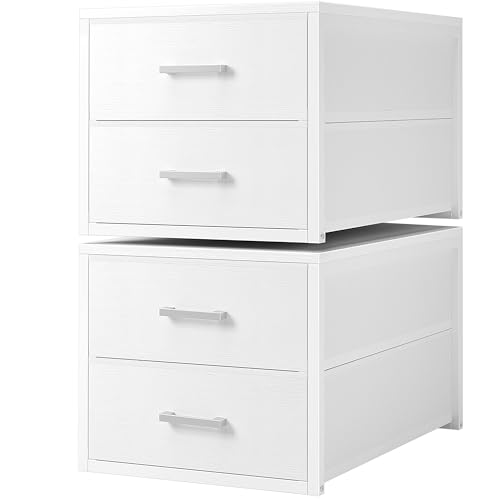
Stackable Closet Drawers: These storage containers are stackable, vertical storage will save a lot of space,just use the rubber pads which coming with the box
Weight and Moving: Practical Living Considerations
While you might love how a piece looks in the store, you’ll need to think about whether you can actually get it home. A dresser and a chest can both surprise you with their weight, especially solid wood builds that tip past 200 pounds. You’ll wrestle with floor space too: dressers spread wide and low, demanding careful leveling so you don’t strain the drawers. Chests shoot upward, turning top-heavy and tricky on stairs. For multifunctional storage in smaller rooms, you must measure doorways and map your path before committing. Treat the true “move weight” as the frame plus whatever you’ll stash inside. Match your available space to what you can realistically haul, and you’ll save your back and your walls.
Recommended Products

【Excellent Storage Capacity】Bedroom dresser with 5 drawers provides plenty of storage space, which can classify your messy items as your need; The wooden table top with good load-bearing performance provides a hard surface to place lamps, books, decor, and more.

Sizes - Measure Chest: X-small 28-31 / Small 32-35 / Medium 36-39 / Large 40-43 / X-large 44-47 / 2X 48-51 / 3X 52-55

【Narrow Dresser with Elegant Design】- The slim dresser stands out with its elegant design and excellent adaptability. Its sleek lines and stylish appearance not only add a touch of brightness to your home but also blend easily into various decorative styles. Whether in the bathroom, bedroom, or other tight spaces, it can perfectly fit in and become a part of your home's aesthetics.
3 Questions to Pick Your Perfect Piece
Before you swipe your card or haul anything home, you’ll want to ask yourself three quick questions that cut through the confusion.
Before you swipe your card or haul anything home, you’ll want to ask yourself three quick questions that cut through the confusion.
What’s your room layout?
Grab a dresser if you have floor space for a low, wide piece of furniture (about 30–36″ tall and 40–60″ wide). Pick a chest of drawers when you need vertical storage for small spaces, with a taller, narrower footprint (about 48–60″ tall and 30–40″ wide). This difference between dresser and chest shapes your interior design flow.
How do you organize?
Dressers give you wider, deeper drawers for bulkier folded items. Chests stack 4–6 drawers for neat, compact sorting with less floor width.
What’s going on top?
Dressers offer room for a mirror or display. Chests limit your surface space, so plan accordingly for your daily routine and safety needs.
Recommended Products

Fusion That Delights: From the BELLAH Collection, this chest of drawers fuses steel, particleboard, and non-woven fabric for a perfect blend of strength, softness, and storage. Pair it with nightstands for a cohesive space that feels just right

【Spacious 9-Drawer Dresser with Storage】 This wide fabric dresser features 6 large drawers for jeans, pants, or sweaters, and 3 smaller drawers for socks, underwear, T-shirts, or accessories. Perfect as a bedroom dresser, closet organizer, or storage chest for entryways, and dorms.

Fusion That Delights: From the BELLAH Collection, this chest of drawers fuses steel, engineered wood, and polyester gabardine for a perfect blend of strength, softness, and storage. Pair it with bedside table for a cohesive space that feels just right

I am Đinh Ai Nguyễn, a content writer at SoftAuraHome.com. For me, home is more than just a place to live. It is where we recover from long days, hold our quiet moments, and create the atmosphere that shapes how we feel. That belief is one of the biggest reasons I wanted to be part of this blog. I started writing about home decor because I have always been drawn to spaces that feel soft, peaceful, and emotionally grounding. I believe a calm room can do more than look beautiful. It can bring comfort, restore energy, and help people feel more connected to themselves and the life they are building. Through Soft Aura Home, I want to share ideas that are not only visually inspiring, but also meaningful in everyday life. With experience in SEO writing and niche content publishing, I understand how to create articles that are clear, useful, and easy to discover. But beyond strategy, I care deeply about how a piece of content makes someone feel. Every article I write is created with the hope of helping readers shape homes that feel gentle, personal, and full of quiet warmth.
Follow on Facebook