
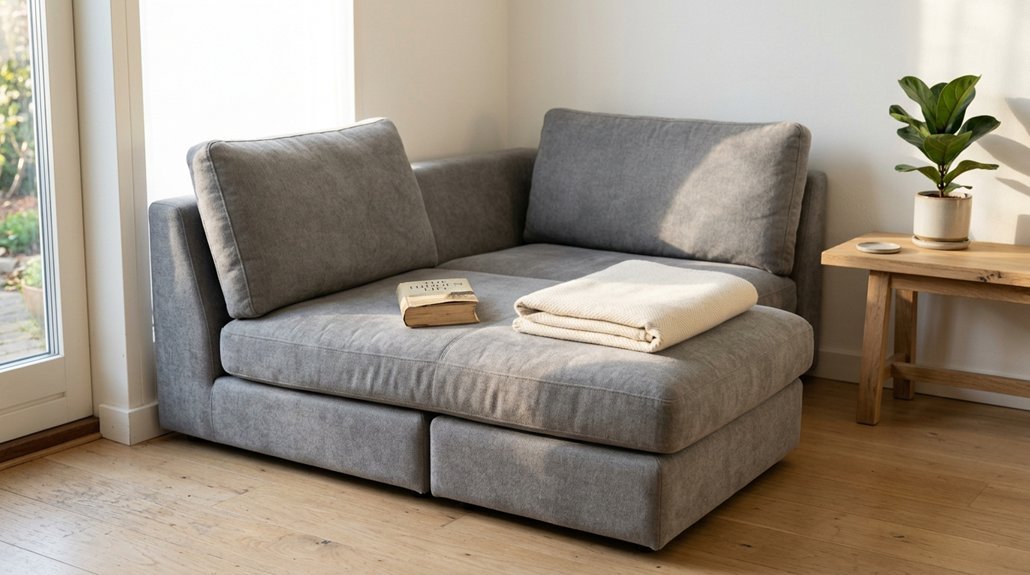


Nearly 70% of sofa buyers now say flexibility matters more than a single “perfect” layout. You’re probably tired of being locked into one seating arrangement that doesn’t fit your next apartment or growing family. A modular sofa solves this by giving you separate pieces you can rearrange whenever life changes. But before you buy, you need to know what separates a sturdy, long-lasting system from a wobbly disappointment. Here’s what actually matters when you’re shopping for one.
What Makes a Sofa “Modular” vs. Fixed?
If you’ve ever tried to squeeze a bulky sectional through a narrow doorway, you already know why modularity matters.
A modular design splits your seating into separate modules—corner units, armless seats, ottomans, and left/right arm pieces. Each piece moves independently, so you can slide them through tight spaces and arranged into different shapes later. You’re essentially getting a sectional sofa that evolves with you.
In contrast, a fixed sofa arrives as one solid unit. The frame comes welded or bolted together, and that’s your layout forever.
Here’s the core difference:
- Modular: You connect pieces with connectors/clips underneath the steel frame (think snap-on hardware) and reconfigure anytime.
- Fixed: You get instant cohesion but zero flexibility.
Recommended Products
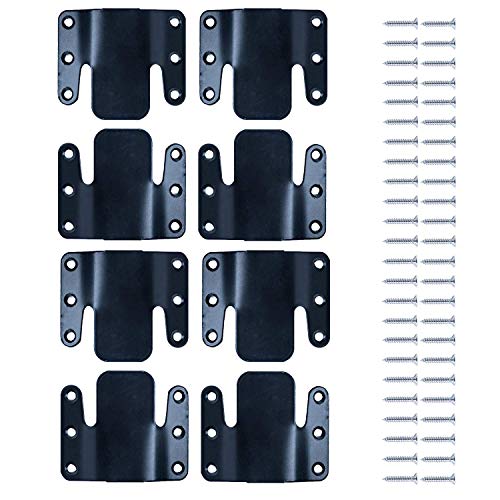
Size: Sectional couch connectors measure 2.95 x 2.6 inches and include screws, 8 pieces (4 sets). These modular couch connectors keep your sectional secure and stable.

SECURE YOUR SECTIONAL WITH CONFIDENCE - The Couch Clamp PRO is your reliable solution for keeping sectional couch connectors securely attached, eliminating annoying gaps. Bid farewell to the frustration of slipping through sofa gaps with this easy-to-install 4-pack that ensures a seamless and sturdy connection for your couch and sofa. Transform your living space into a haven of stability with Couch Clamp PRO.

Size: Sectional couch connectors measure 2.95 x 2.6 inches and include screws, 4 pieces (2 sets). These modular couch connectors keep your sectional secure and stable
How Modular Pieces Connect (and Stay Connected)
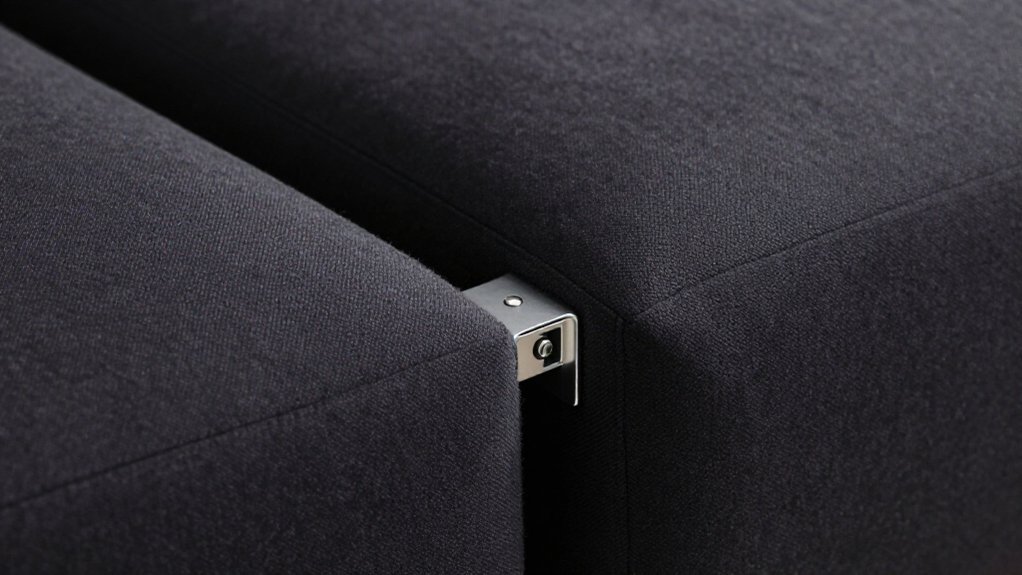
Once you’ve got your modules through the door, you’ll need a way to keep them from sliding around your living room. Your modular sofa might look seamless, but it’s the hidden hardware that does the heavy lifting.
Here are four ways manufacturers keep those pieces locked in:
Four clever methods manufacturers use to lock modular sofa pieces firmly in place.
- Built-in connectors snap or clip sections together from underneath the frame, creating a solid, gap-free surface.
- U-clips slide onto the bottom edges of adjacent pieces, physically linking modules together without visible brackets.
- Non-slip feet add grip on hardwood or tile, stopping called modules from “walking” when you sit down or stand up.
- Magnetic or removable joiners let you detach and rearrange when you’re ready for a new layout.
Heavier frames help too, but good connectors plus traction underneath keep everything right where you want it.
Recommended Products
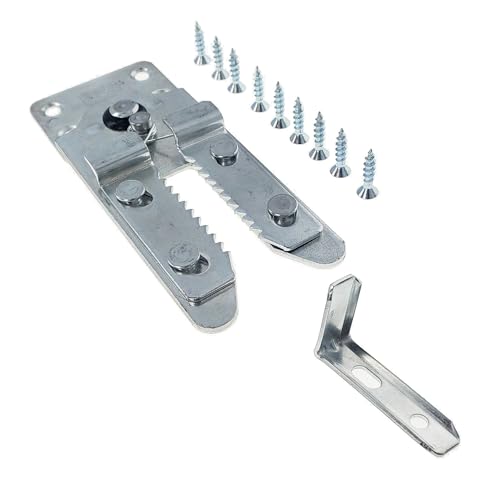
If your sectional sofa keeps moving around, you can fasten the sections together with the Sofa Snap bracket.

Mainly used for movable connection of furniture (sofa-connection between various components).

Ample Quantity - This 12-piece couch connectors set includes 11.8x0.78-inch black straps, offering sufficient replacements to maintain stable connections between modular sofa components
How to Configure Modular Sofas for Your Space
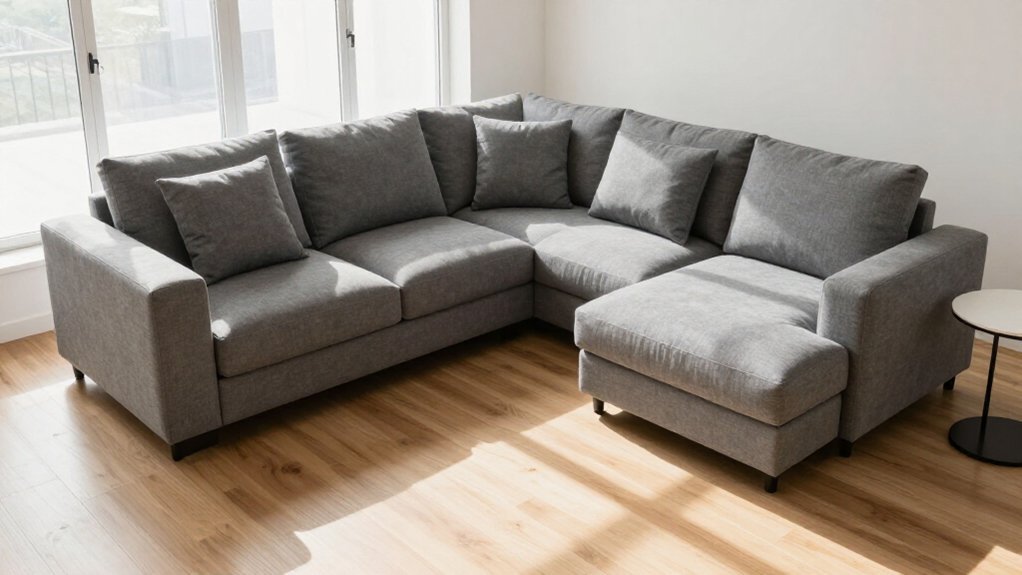
Where do you even begin when your living room could be postage-stamp small or wide open? You start by measuring your room and sketching a quick floor plan.
Small Spaces
Pick a compact 2- or 3-module modular sofa, often with a chaise. Keep 30–36 inches of walkway so you don’t feel crowded.
Medium Rooms
Choose an L-shape with 4–5 modules: one corner at each end, 2–3 armless middle seats, and maybe an ottoman for extra lounge space.
Large or Open Areas
Build a U-shape conversation zone using two corners, 3–4 armless seats, and 1–2 chaises. This anchors the room for hosting and movie nights.
Solving Layout Problems
Your modular couch can be rearranged into different shapes when you hit obstacles like windows or doors. Just move around the chaise or shift modules for a better flow without buying new furniture.
Keeping Pieces in Place
Look for sturdy metal connectors, grippy feet, and add a rug on slick floors so sections stay put.
Recommended Products

What You Can Get: the package content contains 8 pieces of rubber sectional couch connectors and 8 pieces hook and loop cinch straps in black, classic colors and sufficient quantities can support your use and replacement needs in the daily life

Package contents: this package comes with 16 pieces sofa couch straps in total, with classic color of black and enough quantity that is suitable for you to use and replace, you can also share them with your friends
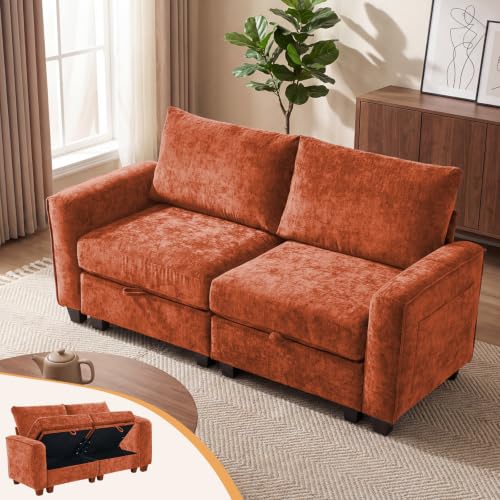
【Cozy 2-Seat Loveseat Design】This modular loveseat sofa comfortably seats two people, offering a cozy and relaxing spot for everyday lounging. Its compact size makes it perfect for living rooms, apartments, bedrooms, offices, or small spaces
Why Modular Sofas Outlast Fixed Designs
You’ve figured out how to make a modular sofa fit your space, but the real payoff comes years down the road. A quality modular sofa grows with you instead of trapping you in one shape.
A quality modular sofa grows with you instead of trapping you in one shape.
Here’s what makes modular designs last:
- Adaptable layouts — The modular sofa lets you switch from straight to L-shape or U-shape as your home or family changes, so you don’t buy new furniture every move.
- Built to reconnect — Pieces are designed with sturdy clips or steel-frame joiners that keep modules locked tight, preventing the “walk apart” problem that ruins cheaper units.
- Easy refresh — Removable covers and reversible cushions extend freshness through spills and daily wear.
- Future-ready function — Reconfigure for entertaining or guest beds; an interior designer would call this longevity smart planning. That flexibility makes modular sofas stay useful 10+ years.
Recommended Products

Modular Design:As an armless middle seat, this module seamlessly connects with other sectional units to create your ideal sofa layout. Easily expand or reconfigure your living room setup without bulky frames or tools.

Modular Design:As an armless middle seat, this module seamlessly connects with other sectional units to create your ideal sofa layout. Easily expand or reconfigure your living room setup without bulky frames or tools.

Modular Design:As an armless middle seat, this module seamlessly connects with other sectional units to create your ideal sofa layout. Easily expand or reconfigure your living room setup without bulky frames or tools.
The Real Downsides of Going Modular
Before you commit to a modular sofa, you’ll want to weigh a few real trade-offs. Your sections might shift or slide apart over time, especially if you’ve got kids or pets bouncing around, and you’ll pay more upfront for those connecting clips and rearrange-ready frames. You’ll also wait longer, often six weeks or more, since these pieces are usually built to order rather than sitting ready in a warehouse.
Recommended Products

Premium Corduroy & Comfortable Support Foam Couch:Made with soft, skin-friendly corduroy fabric, this sectional couch delivers a cozy feel and textured look for modern living rooms. High-density foam cushions provide balanced support and comfortable seating for relaxing, reading, lounging, or watching TV.

4 Convertible Modes & Flexible Modular Design: This modular sectional sofa is composed of 2 lightweight L-shaped oversized chaises, designed to bring maximum versatility to your living space. Unlike fixed sofas, it features 4 adjustable using modes—you can freely rearrange and combine the modules according to your daily needs, whether you want a compact layout for small spaces or a spacious setup for gatherings. It effortlessly adds a personalized touch while adapting to any living room style.
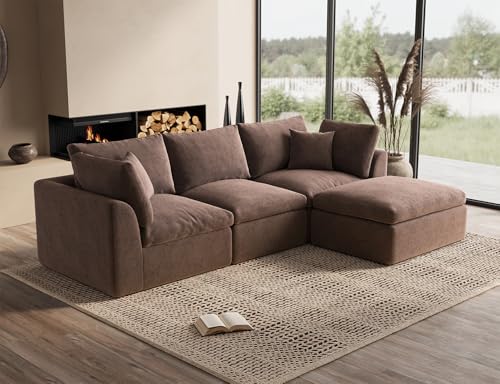
【NO ASSEMBLY REQUIRED】Be ready in 1 step! Setting up this cloud couch with ottoman is incredibly easy. Simply unbox the cushions, place them together, and let them naturally expand over 48-72 hours. No extra tools or complicated assembly steps are needed. It’s ready to use this cloud sofas for living room with minimal effort.
Potential Module Separation
While modular sofas give you flexibility, they can also shift apart when you sit down or move around. Your modular pieces might walk apart over time, especially if the connectors underneath aren’t sturdy enough or the frames sit too light. This happens more with lower-quality builds where clips loosen easily.
Here’s what affects how well your Sectional stays put:
- Connector quality: Strong hardware underneath keeps modular pieces locked together better than flimsy clips.
- Weight and build: Heavier frames resist shifting more than lightweight ones.
- Surface and grip: Slick floors let modules slide unless you’ve got grippy feet or a rug underneath.
- Household activity: Kids and pets jumping on cushions create repeated impacts that test your connectors over time.
Some brands solve this with clever fixes, like KING’s Magic Joiners, magnets that attach to the steel frame and pull pieces together while staying removable when you want to reconfigure.
Higher Investment Cost
The price tag on a modular sofa can give you pause, and for good reason. Modular furniture typically costs more upfront than standard sofas because you’re paying for extra hardware like metal connectors and grippy feet that keep modules aligned.
This investment makes sense if you reconfigure often. But if you’ve settled into your real estate and rarely change your living room layout, that flexibility may not justify the price.
For small living spaces, the higher cost can still pay off through adaptability. Yet the decision process itself adds pressure. You’re choosing exact module counts and configurations, which feels more complex than grabbing a single showroom piece.
Quality stability features prevent modules from “walking apart” over time. Still, weigh whether you’ll actually use that reconfiguring power before committing to the bigger investment.
Longer Wait Times
Beyond the price tag, you’ll face another reality with modular sofas: patience isn’t optional, it’s required.
When a modular sofa allows total customization, you’re not grabbing ready-made inventory. You’re building to order.
Four hurdles slow things down:
- Decision fatigue: Weighing pros and cons of modules, fabrics, and add-ons stretches your timeline.
- Made-to-order production: Your setup doesn’t exist until you finalize it, so nothing ships immediately.
- Supply-chain ripple effects: Solid wood frames and performance fabrics face sourcing delays that stack up.
- Component matching: Each piece must arrive together, so one backordered module stalls everything.
Frequently asked questions include, “Can’t I speed this up?” Usually, no. The tradeoff for flexibility, whether you want to make a small space work or reconfigure later, is the wait.
Modular or Sectional: Which Serves You Better?
If you’re torn between a modular sofa and a traditional sectional, you’re not alone. Both offer generous seating, but they serve different lifestyles.
How They Differ
A modular sofa breaks into separate pieces you can connect, rearrange, or move around whenever your needs change. Want the chaise on the other side? You can swap it. Need to downsize? Remove a piece instead of replacing the whole thing. Modules also squeeze through small doorways and tight elevators easily.
A traditional sectional arrives as a fixed L- or U-shape. It creates an instant, cohesive conversation zone and looks polished, but you can’t reconfigure it. It’s heavier to carry and harder to adapt if you relocate or remodel.
Which Fits You?
Choose modular if you rent, rearrange often, or expect your space to evolve. Pick a sectional when your floor plan feels final and you crave one stable, unified look.
Recommended Products

High Quality Material--Our sectional couch connectors are made of heavy metal material. These sectional sofa clips are sturdy and durable, not easy to break or rust, and the surface is smooth.

【Anti-slip silicone design】Based on the pain point that traditional couch connectors with Velcro tend to slip, our sofa connectors feature anti-slip silicone strips on the back, effectively preventing the Velcro from slipping off the smooth surface of sofa legs.

𝐂𝐇𝐄𝐂𝐊 𝐒𝐔𝐈𝐓𝐀𝐁𝐈𝐋𝐈𝐓𝐘 𝐁𝐄𝐅𝐎𝐑𝐄 𝐏𝐔𝐑𝐂𝐇𝐀𝐒𝐈𝐍𝐆: Confirm that there's ample space and a sturdy wooden frame at the bottom of the sofa to install the sofa snap sectional couch connectors. Ensure the sofa's bottom frame is at least 1 inch off the ground.
How to Spot Quality in Modular Construction
Kick the tires on a modular sofa before you buy, because not all pieces lock together as securely as they should. Quality materials and smart construction will help you decide which one deserves your living room floor.
- Check the connectors. Look for sturdy metal clips or “magic joiners” under the frame that keep modules from shifting when they’re moved around.
- Test the frame. Heavier solid-wood or metal frames stay put better than lightweight ones.
- Inspect the cushions. High-density foam holds its shape longer, especially with kids or pets jumping on board.
- Demand washable covers. Removable, machine-washable fabric means your modular sofa stays fresh through years of rearranging.
Recommended Products

Includes 2 piece fixture bracket furniture restoration sofa connector tilt mechanism connection bracket.

Set Contains:Sofa connectors(2 sets, 4 pieces),24 screws, 24 flat washers, 1 Screwdriver bits.

STURDY CONNECTION & NO SLIDING: Tired of your sectional sofa constantly slipping out of place? Our advanced screw-in steel couch connectors are the solution you've been looking for. These robust screw-in clips provide a permanent rock-solid connection between your sectional sofa pieces to keep sofa cushions from sliding. No more frustrating readjustments, sliding issues or floor scratches– just enjoy a reliable and lasting connection.
When Modular Sofas Justify Their Price
Because you’re paying extra for all those connectors, locking hardware, and engineering that keeps pieces aligned, you’ll want to know you’re getting your money’s worth. A modular sofa justifies its price when you’ll actually rearrange it. If you plan to switch your chaise from left to right, create an L-shape, or pull sections apart for different conversation zones, you’re using what you paid for.
Modular designs that come with heavy-duty metal or rubber connectors, grippy feet, and under-frame clips stay put without overwhelming your space. They won’t slide apart when someone flops onto the Double Chaise.
They’re also worth it if you move often or expect layout changes. Add modules when you upsize, remove them when you downsize. Some even convert to guest beds, saving you from buying separate sleepers later. Quality builds with washable covers can last 10+ years, trimming replacement costs over time.
Recommended Products

ENDLESS CONFIGURATION OPTIONS - Create a custom living room layout with 7 independent armless accent chairs that easily rearrange into a conversational pit or spacious sectional sofa

HEAVY-DUTY ALL-WEATHER FRAME: Engineered for lasting outdoor enjoyment, this patio conversation set features a heavy-duty, rust-resistant metal frame with a protective coating for exceptional stability. The durable wood-look table and integrated side panels are weatherproof, UV-protected, and easy to clean, resisting fading, warping, or getting overly hot in the sun—unlike metal tables.

Size: size of sofa clamp 3.7 x 1.8 x 0.08 inches; Screw size 1 Inch; Color sliver; Package includes 4 pieces sectional connectors

I am Đinh Ai Nguyễn, a content writer at SoftAuraHome.com. For me, home is more than just a place to live. It is where we recover from long days, hold our quiet moments, and create the atmosphere that shapes how we feel. That belief is one of the biggest reasons I wanted to be part of this blog. I started writing about home decor because I have always been drawn to spaces that feel soft, peaceful, and emotionally grounding. I believe a calm room can do more than look beautiful. It can bring comfort, restore energy, and help people feel more connected to themselves and the life they are building. Through Soft Aura Home, I want to share ideas that are not only visually inspiring, but also meaningful in everyday life. With experience in SEO writing and niche content publishing, I understand how to create articles that are clear, useful, and easy to discover. But beyond strategy, I care deeply about how a piece of content makes someone feel. Every article I write is created with the hope of helping readers shape homes that feel gentle, personal, and full of quiet warmth.
Follow on Facebook