
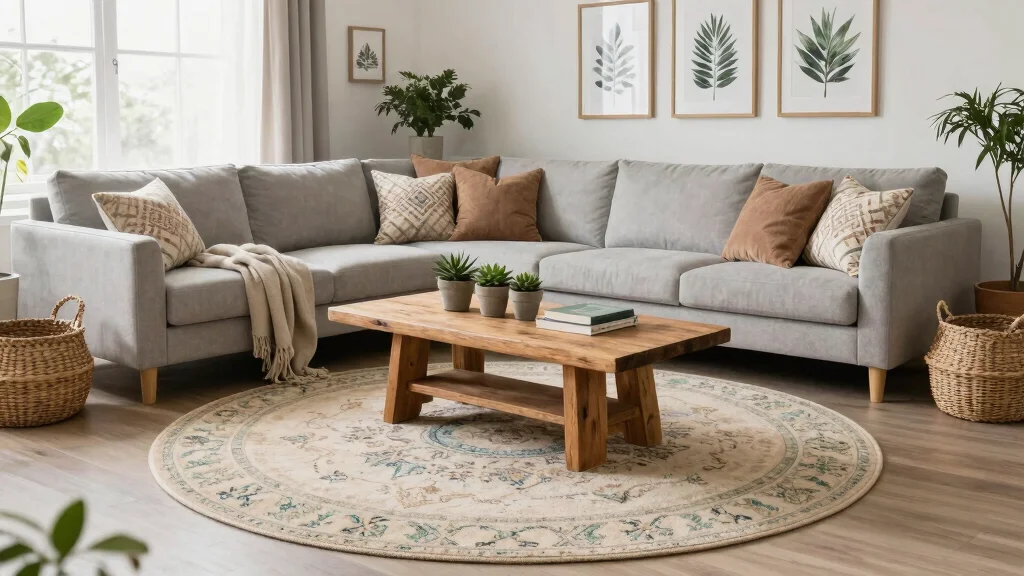


Finding the right area rug for your living room can feel like an overwhelming task. With so many styles and materials out there, it’s easy to get lost in the options. Transitional area rugs blend traditional designs with modern elements, making them an appealing choice for those looking to create a harmonious home environment. I created this post to help you navigate these unique rugs that fit various tastes and preferences, especially while being eco-friendly.
If you love home decor and enjoy creating a space that reflects your personality, then you’re in the right place. This guide is tailored for homeowners, decorators, and anyone eager to transform their living rooms into stylish sanctuaries. Together, we’ll explore 17 transitional area rugs that seamlessly blend styles to suit your modern home decor.
By diving into this list, you’ll discover rugs that not only enhance the aesthetic appeal of your space but also align with home interior trends. Expect to find options that are eco-conscious, vibrant, and full of character. You’ll gain insight into how to choose the perfect rug that complements your living room design while adding comfort and flair.
Key Takeaways
– Transitional area rugs offer a perfect blend of traditional and modern designs, making them versatile for various styles.
– Eco-friendly materials are increasingly popular, providing stylish options without compromising sustainability.
– Geometric patterns and vibrant hues can energize a space while neutral tones create a calming atmosphere.
– Layering rugs can add depth and texture to your living room, enhancing both comfort and visual interest.
– Vintage-inspired designs and nature-themed patterns bring a unique touch, allowing you to express your personality through your decor.
Recommended Products
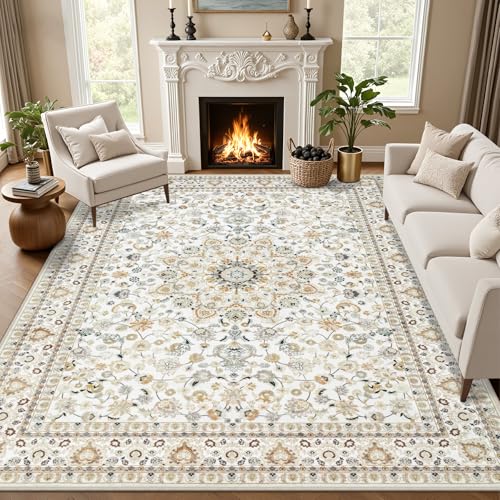
Timeless Classic Design Rug: Featuring an elaborate traditional pattern and harmonious color palette, these 5x7 area rugs bring artistic elegance to the interior. The versatile design works with various decor styles from vintage and bohemian to contemporary, making it suitable for living room, bedrooms, dining room, hallway, kids' playrooms, or home offices. Built to withstand daily use while maintaining its visual appeal, these rugs for living room 5x7 combines durability with timeless beauty
Timeless Classic Design Rug: Featuring an elaborate traditional pattern and harmonious color palette, these 9x12 area rugs bring artistic elegance to the interior. The versatile design works with various decor styles from vintage and bohemian to contemporary, making it suitable for living room, bedrooms, dining room, hallway, kids' playrooms, or home offices. Built to withstand daily use while maintaining its visual appeal, these rugs for living room 9x12 combines durability with timeless beauty

Beautiful Design Abstract Rug:The 5x7 rug design is unique and trendy, the colors blend with nature, the abstract design complements the modern tones, it blends perfectly with your home decor, adding more warmth and comfort to your home. Suitable for living room, bedroom, dining room, study, home office, etc
1. Eco-Conscious Comfort
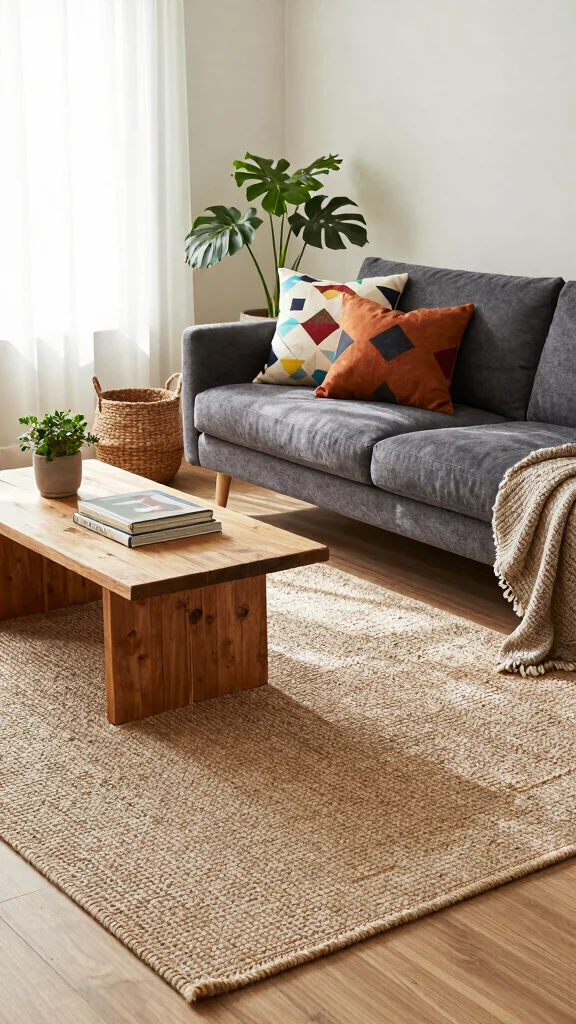
Opting for eco-friendly rugs not only contributes to a healthier planet but also enhances your living room’s style. Materials like bamboo, jute, and recycled fibers provide unique textures while ensuring sustainability. For instance, a jute rug in warm tones pairs beautifully with both contemporary and traditional furniture, creating an inviting atmosphere.
These sustainable options offer a soft feel underfoot and come in various designs. Additionally, their durability makes them a worthwhile investment, perfect for high-traffic areas. The natural hues promote a soothing vibe that can help you relax after a long day.
Consider these tips to incorporate eco-conscious comfort into your home:
– Look for rugs labeled with GOTS certification for verified sustainability.
– Pair with houseplants and organic decor to create a cohesive natural aesthetic.
– Mix textures by combining a jute rug with a sleek leather sofa for an appealing contrast.
This approach not only elevates your living space but also emphasizes the beauty of natural materials, enhancing the overall design.
Recommended Products

STYLISH GEOMETRIC PATTERN: Features a captivating diamond pattern in a soothing ivory and gray palette. This rug enhances any room with its modern tribal aesthetic. It provides a versatile foundation for various design schemes.

Low 0.39" pile of synthetic fiber construction

Modern Geometric Area Rug: The living room rug features a colorful geometric pattern, creating a novel, unique, and highly fashionable look. These area rugs 8x10 perfectly complement modern interior design styles and help visually expand the space, making the room appear more open and bright
2. Geometric Patterns Galore
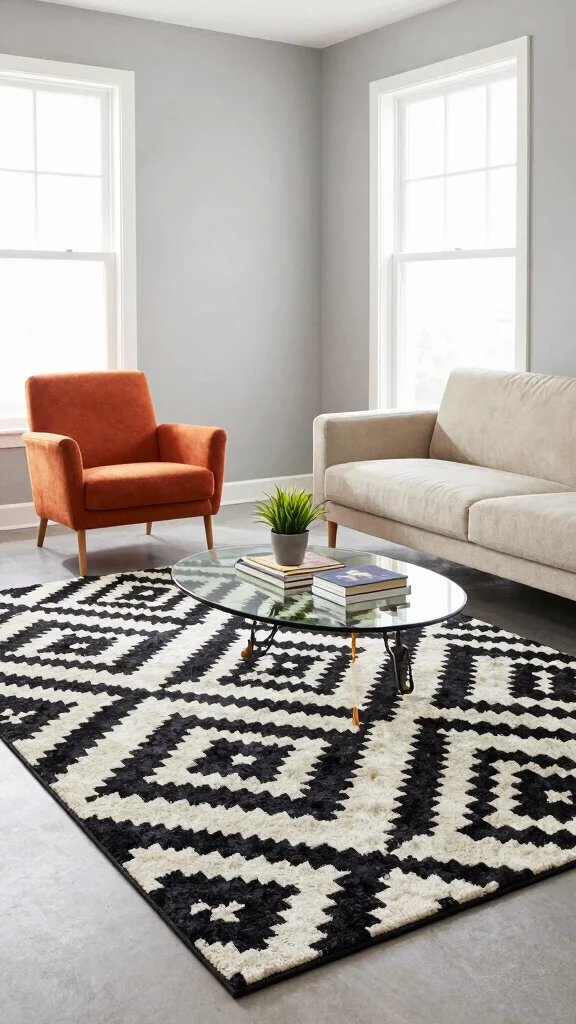
Geometric patterns can infuse your living room with visual excitement and energy. These designs can range from understated to bold, offering endless styling possibilities. A rug featuring a geometric print can serve as a captivating centerpiece that anchors the room while adding depth and character.
For a modern touch, select rugs with sharp lines or vibrant hues. Alternatively, softer geometric designs can seamlessly integrate with classic furnishings, striking a balance between contemporary and traditional styles.
Here are some ways to incorporate geometric patterns:
– Choose larger patterns for spacious rooms and smaller prints for cozier areas.
– Use matching accessories to complement the rug’s colors and tie the room together.
– If your sofa is a solid color, a patterned rug adds a fun focal point without overwhelming the decor.
This approach enhances your living space’s overall aesthetic and creates a lively atmosphere full of personality.
Recommended Products

Elegant Floral Rug: This 8x10 area rugs vintage-inspired botanical rug blends rich dark greens, vibrant and delicate floral complements any decor style, from vintage and bohemian to farmhouse and modern. Perfect rugs for living room, bedrooms, dining room rugs for under table, entryways, kids' playrooms, or home offices, it adds warmth and charm to any space. Both durable and stylish, it withstands high-traffic areas while maintaining a cozy, inviting appeal

All-in-One Non-Slip & Washable Area Rug: Tired of dealing with separate rug covers and pads? Our innovative foldable area rug combines both features into one convenient piece. Designed with a low pile and exceptional non-slip backing, it stays securely in place, even in high-traffic areas. Plus, it can be easily cleaned in your home washing machine.

【Easy-Care Machine Washable Rug】 Designed for active households, this low-maintenance boho rug combines style with practicality. Conveniently machine washable (cold gentle cycle recommended), and do not add bleach. Maintain its vibrant print between washes with routine vacuuming or spot cleaning. Minor shipping creases naturally relax within days when laid flat – no extra effort needed.
3. Traditional Meets Modern
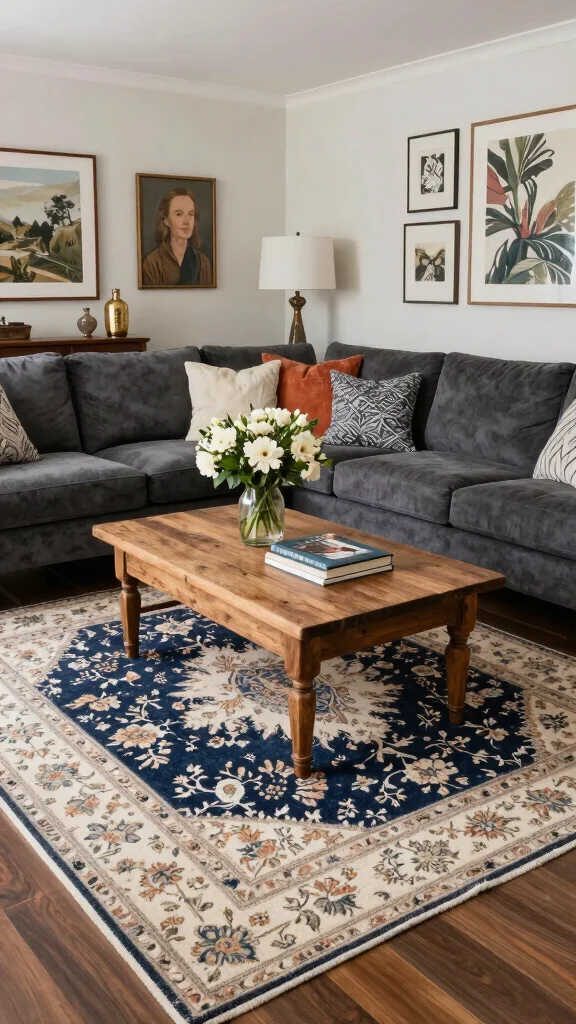
Transitional area rugs skillfully combine classic patterns with contemporary designs, making them a versatile choice for any living room. Imagine vintage florals reinterpreted in fresh colors or traditional Persian styles given a modern twist. This unique blend allows you to mix and match various decor elements, creating a personalized style.
A transitional rug in muted tones can warm up a minimalist space, adding a touch of elegance without being overpowering. The beauty of these rugs lies in their ability to complement both modern art and vintage furniture seamlessly.
Here are ways to incorporate transitional rugs:
– Match the rug’s colors with your living room’s overall palette to ensure harmony.
– Layer a traditional rug over a solid carpet for added depth and interest.
– Experiment with contrasting textures; a plush rug against a sleek leather sofa can create a stylish and inviting vibe.
This combination enhances your space’s aesthetic and invites warmth and character.
Recommended Products

Modern Farmhouse Checkered Rug: Inspired by timeless checkerboard patterns with the natural look of jute, this washable rug complements modern farmhouse, neutral, rustic, and contemporary décor. Distressed charcoal black and natural tones add cozy texture to entryways, kitchens, and covered outdoor spaces

Modern geometric rug in classic ivory and silver grey

Rug measures 22 x 60" (approximately 0.5" thick), made of durable 100% Jute, a shiny vegetable fiber spun into coarse threads.
4. Textured Layers
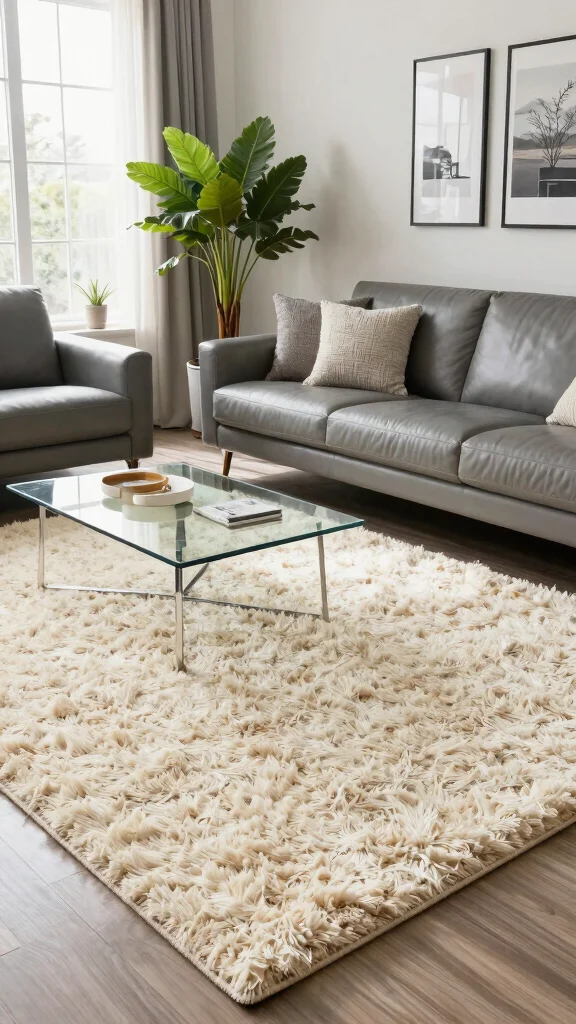
Integrating textured rugs can significantly enrich your living room’s design. Consider options like shag, looped, or woven rugs to introduce tactile variety. Textures not only invite touch but also create visual intrigue, making your space feel more dynamic and inviting.
A shaggy rug can soften hard surfaces, which is ideal for rooms with wooden or tiled floors. In contrast, a woven rug can add warmth and comfort, enhancing the overall coziness of your living area.
Here are some tips for adding texture:
– Contrast textures with smooth furniture to achieve balance; a plush rug pairs beautifully with a sleek coffee table.
– Incorporate layering; a flat-weave rug topped with a smaller shag rug can create a visually appealing look.
– Textured rugs also absorb sound, making them perfect for open floor plans or homes with high ceilings.
This approach elevates your décor while enriching the sensory experience of your living space.
Recommended Products

Trendy Modern Rug: Our area rug is designed in today's popular minimalist style, featuring adaptable printed patterns that seamlessly blend into a wide range of interior aesthetics. This neutral rug adds understated elegance with a strong feeling of individuality to your living room, bedroom, dining room, nursery or playroom.

DURABLE AND PLUSH: Crafted from 100% Polypropylene, Long lasting and sturdy jute backing (rug pad recommended), 0.31 inch rug thickness, meant for indoor use, perfect for high traffic areas, ideal for homes with children, rug can fit under most doors

[COLOR & PATTERN]: SAFAVIEH's Monaco area rug features a pink-toned field with an ornate medallion, framed by a multicolor-toned floral border; actual color may appear darker or lighter than shown, depending on lighting and screen settings
5. Vibrant Hues for Energy
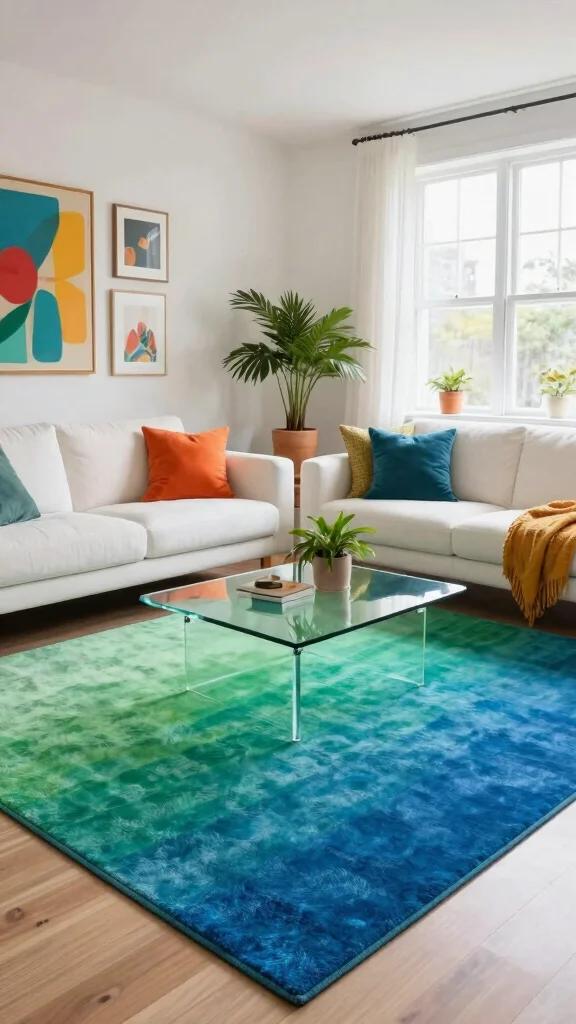
Incorporating vibrant colors into your living room with area rugs can instantly uplift the space’s mood. Bright, bold rugs act as focal points, energizing the atmosphere and creating a lively environment. Opt for a rug with a striking pattern or a bold solid color that contrasts beautifully with your furnishings.
For example, a vivid turquoise rug can breathe life into a neutral palette, drawing the eye and creating a playful ambiance. This lively addition can transform the overall feel of your room, making it more inviting and cheerful.
Consider these strategies for using vibrant hues:
– Balance bright rugs with neutral furniture to avoid overwhelming the space.
– Use accent pillows or artwork that echo the rug’s colors for a cohesive look.
– Rugs with color gradients can add depth while maintaining a bold presence.
This approach enhances your living room’s aesthetic and brings a burst of energy to your home.
Recommended Products

A warm sandy beige dominates the surface, with soft cream grid lines crossing in a classic plaid pattern — the overall palette feels calm, airy, and effortlessly neutral.

A warm cream base dominates the entire surface, with thin, irregular black lines forming an abstract grid — the contrast is bold yet balanced, giving the rug a clean, graphic quality without feeling stark.

BOLD GEOMETRIC PATTERN: This striking rug showcases a distinct geometric design with tribal influences. It features a captivating arrangement of shapes and lines. Anchor your space with this visually engaging floor covering.
6. Eco-Friendly Materials
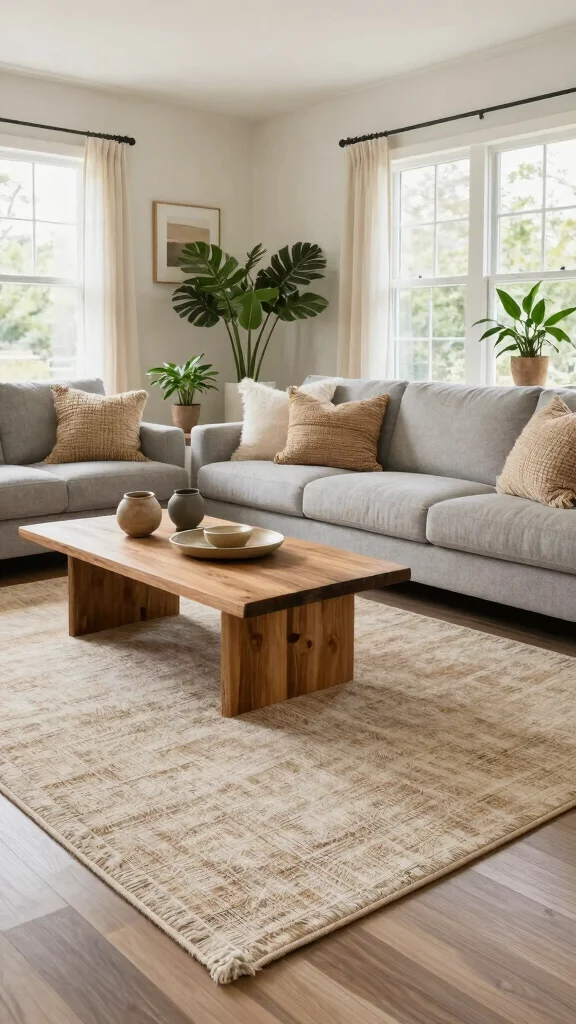
When selecting area rugs, consider eco-friendly materials like organic cotton, bamboo, or recycled fibers. These choices not only minimize environmental impact but also provide durability and stylish options for your living space. Organic cotton rugs are soft underfoot and come in a plethora of colors and patterns, making them suitable for any decor style.
Bamboo rugs resist mold and mildew, making them an excellent choice for high-humidity areas. With these options, you can enjoy a beautiful space while supporting sustainable practices.
Here are ways to choose eco-friendly rugs:
– Look for sustainable materials that are free from harmful chemicals.
– Check for certification labels to ensure responsible sourcing.
– Eco-friendly rugs often feature unique textures and patterns, adding a rustic charm to your decor.
This choice elevates not only your design but also contributes positively to the environment.
Recommended Products

Pile: Polypropylene - Backing: Jute - Weave: Machine Woven (Power Loomed) - Made In: Turkey

The Georgie Collection is a vintage-inspired area rug with saturated, vivid colors and a traditional design that works with many decor styles; made by renowned interior designer Amber Lewis in collaboration with Loloi

Timeless Area Rug for Living Room: The Jules Collection area rugs capture a beautiful vintage look that will enhance your home decor. Made with an easy-to-clean construction and designed by Chris Loves Julia x Loloi.
How To Choose The Right Transitional Area Rug for Your Living Room
Choosing the perfect transitional area rug for your living room can feel overwhelming. With so many styles and materials, it’s essential to focus on what suits your home best. Here are some key factors to consider while making your decision:
1. Size Matters
Selecting the right size for your rug is crucial. A rug that’s too small can make a space feel disjointed while one that’s too large can overwhelm it. Measure your living room area first. Aim for at least the front legs of your furniture to be on the rug for a cohesive look. If you have a larger area, consider a bigger rug that can anchor all your seating arrangements together.
2. Material Choices
The material of your rug will greatly affect both its look and feel. Natural fibers like wool and jute are often durable and eco-friendly, perfect for high-traffic areas. Synthetic fibers such as nylon or polyester can offer vibrant colors and patterns but may not be as soft underfoot. Consider how the material will hold up in your living space, especially if you have pets or children.
3. Style Harmony
Transitional area rugs are designed to blend styles, so think about how the rug will fit with your existing decor. If your living room boasts modern home decor, look for rugs with geometric patterns or minimalistic designs. If your space has traditional elements, opt for rugs that incorporate classic motifs. This helps create a seamless transition between different design styles.
4. Color Palette
The colors in your rug can set the mood for your living room. Choose hues that complement your furniture and walls. Soft neutrals can create a serene atmosphere, while vibrant colors can energize the space. If you’re unsure, select a rug with a mix of colors found in your room. This can tie all elements together beautifully.
5. Budget Wisely
Rugs come in a wide range of prices. Set a budget before you start shopping. Remember that investing in a quality rug can pay off in the long run, as it will last longer and maintain its appearance better than cheaper options. Check for sales or eco-friendly rugs that might offer both affordability and sustainability.
6. Maintenance Needs
Consider how much maintenance you are willing to commit to. Some rugs require regular professional cleaning, while others can be spot cleaned or vacuumed easily. If you have a busy household, look for rugs that are stain-resistant and easy to care for.
Pro Tip: Always take home samples if possible. Place them in your living room to see how they look at different times of the day. Lighting can change how colors appear, so this step can help you make a confident choice.
By focusing on size, material, style, color, budget, and maintenance, you can make a well-informed decision on a transitional area rug that elevates your living room’s design and suits your lifestyle. Happy decorating!
Recommended Products

100% NATURAL JUTE : This rug has been carefully handmade using 100% natural jute fibers, which can result in slight variations in color and weave. These variations add to the...
7. Soft Neutrals for Serenity
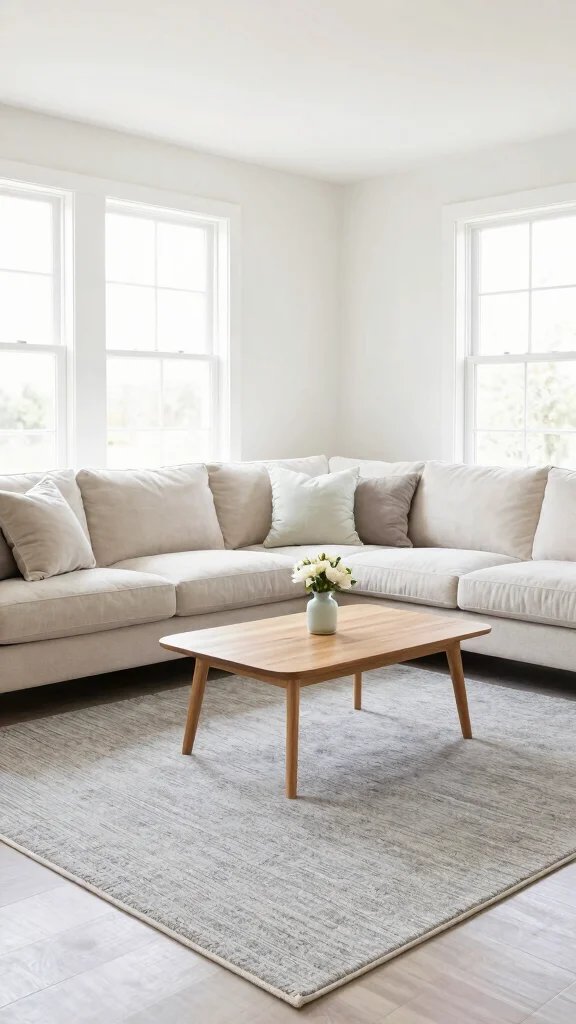
Soft neutral tones in area rugs can create a calming and serene atmosphere in your living room. Shades like beige, soft gray, and muted whites allow for easy integration with existing decor while promoting tranquility. Such rugs can soften a space, making it feel cozier and more welcoming.
Versatile and adaptable, they complement both modern and traditional styles, enhancing the overall appeal of your home.
Consider these tips for incorporating neutral rugs:
– Layer neutral rugs with colorful throws or decorative accents to create interest without overwhelming the space.
– Add depth by incorporating different textures in neutral tones.
– Neutral rugs serve as the perfect backdrop for showcasing vibrant art pieces or colorful furniture.
This approach fosters a serene environment while highlighting the beauty of your decor.
Fun Fact: Soft neutrals in transitional area rugs living rooms can make a space feel up to 20% calmer and easier to decorate. Pair beige, soft gray, and muted whites to layer textures—it’s a practical, timeless base that blends styles beautifully.
Recommended Products

[DURABLE QUALITY HANDMADE CONSTRUCTION]: Hand-tufted by skilled artisans for a truly unique textured look and feel

[Striking Abstract Design]: Our abstract modern rug stands out with a striking mix of bold color blocks and eye-catching organic textures. It brings a touch of cutting‑edge elegance to living rooms, bedrooms, kids’ rooms and more, and fits right in with minimalist styles without even trying.

Ultra Soft & Non-slip: Featuring a shaggy carpet surface, the Ophanie soft area rug is highly soft with a high-density sponge interlayer. This rug effectively reduces shedding, and the non-slip bottom with small, durable anti-slip dots enhances friction to prevent sliding.
8. Accent with Borders
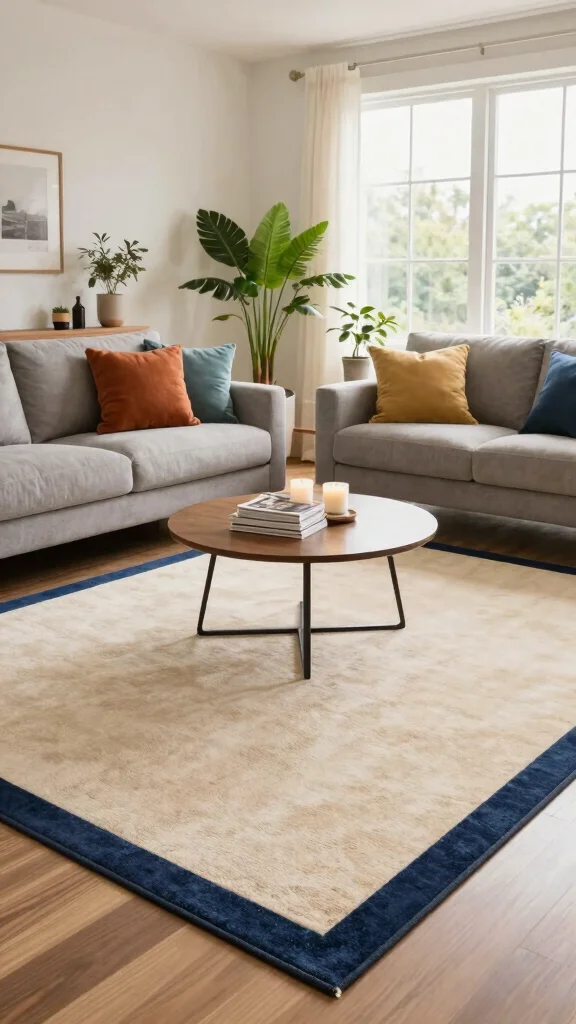
Rugs with borders can beautifully define spaces and infuse sophistication into your living room. A bordered rug acts as a frame for your furniture, establishing a visual boundary that delineates different areas within an open floor plan. These rugs often showcase contrasting colors or patterns along the edges, drawing attention while harmonizing with the room’s decor.
Borders not only provide structure but also enhance the overall design without overwhelming the space.
Here are some tips for using bordered rugs:
– Choose a border color that complements your existing color scheme for a cohesive appearance.
– Ensure the rug size is appropriate; it should extend beyond your furniture to avoid a cramped feel.
– Bordered rugs can highlight specific areas like conversation zones or reading nooks.
This simple yet effective design choice elevates your living space, adding both style and function.
Recommended Products

Inspired by Timeworn Stonework: Layers of weathered walnut brown, smoky taupe, and faded stone beige, grounded by subtle charcoal undertones, recall aged masonry and worn courtyard tiles. Framed borders, geometric medallions, and distressed angular motifs create a collected vintage look with quiet depth, fitting naturally into Warm Transitional, Modern Rustic, and Modern Farmhouse interiors

HIGH-LOW TEXTURE: This rug showcases a captivating raised geometric pattern. It adds a sophisticated, sculptural dimension to your flooring. The unique texture brings visual interest and depth to any room. Its rustic boho charm elevates your home decor instantly.

A rich caramel brown dominates the field, crisscrossed by wide cream grid lines that create a bold, open checkered layout. Tiny sage green accents appear at each grid intersection, adding just enough color contrast to keep the palette feeling fresh rather than flat.
9. Vintage-Inspired Designs
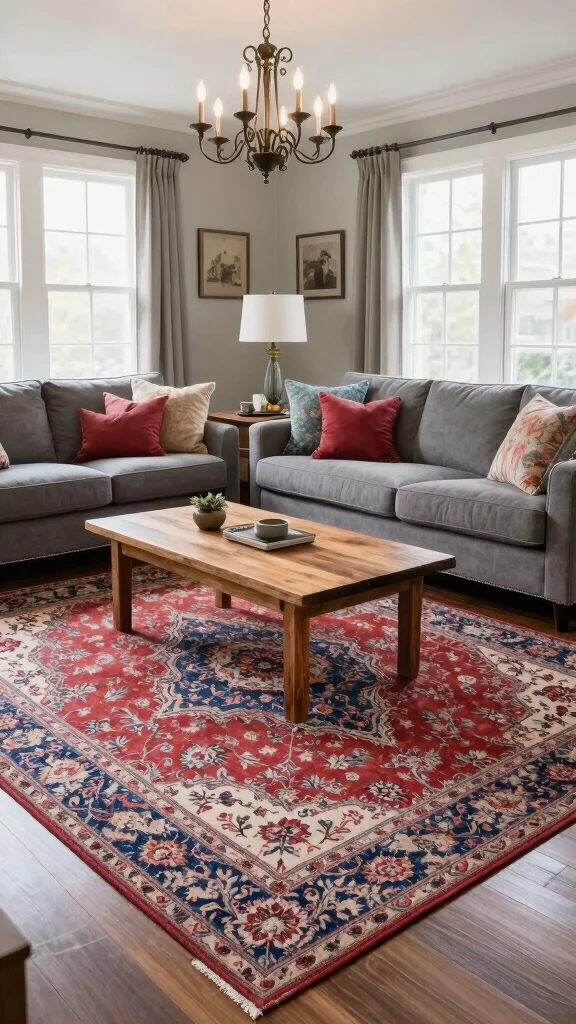
Vintage patterns bring character and a sense of history to your living space. Vintage-inspired area rugs often feature intricate details and muted colors, enhancing your living room’s charm. These rugs serve as focal points, grounding the room and providing a timeless feel that contrasts beautifully with modern furniture.
Incorporating vintage designs can create a unique style that reflects your personal taste and interests.
Here are some ideas for using vintage-inspired rugs:
– Mix vintage rugs with contemporary elements for a balanced aesthetic.
– Use subtle lighting to highlight the rug’s details while maintaining a cozy atmosphere.
– Vintage rugs often tell a story; their presence invites conversation and adds interest to your decor.
This approach enriches your living space with personality and history, creating an inviting ambiance.
10. Patterns of Nature
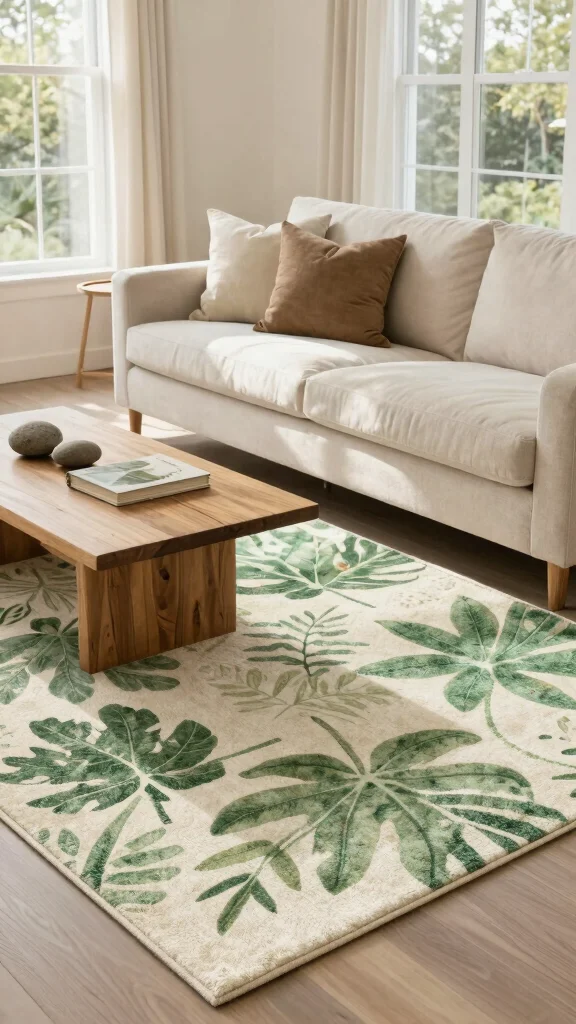
Nature-inspired patterns can seamlessly bring the outdoors into your living room, offering a refreshing aesthetic. Rugs featuring botanical prints, leaf motifs, or earthy tones create a calming environment, perfect for fostering tranquility in your home. These designs beautifully complement natural wood furniture or stone accessories, enhancing the organic vibe of your space.
Incorporating nature-inspired rugs can elevate your decor and create a harmonious atmosphere that feels both relaxing and inviting.
Here are ways to use nature-inspired designs:
– Use a color palette drawn from nature to create a cohesive look throughout your living room.
– Layer these rugs with textured throws or pillows that mimic natural elements.
– Nature-inspired rugs work well with both bohemian and modern decor styles, offering versatility and charm.
This approach not only beautifies your living space but also helps create a serene sanctuary.
11. The Beauty of Minimalism

Minimalist rugs emphasize simplicity and clean lines, making them ideal for modern living rooms. These rugs often feature solid colors or subtle patterns, providing an elegant touch without overwhelming the space. Choosing a minimalist rug allows for flexibility in decor choices, as it complements a variety of styles while maintaining a tidy, uncluttered look.
Opt for neutral colors for timeless appeal or select a bold hue for a pop of color without excessive details.
Consider these tips for incorporating minimalist rugs:
– Use them to enhance the visual flow in open areas, allowing other design elements to shine.
– Minimalist rugs are often easier to clean, perfect for high-traffic spaces.
– Pair with simple furniture and accessories for a cohesive minimalist aesthetic.
This approach enhances the overall design, creating a serene and sophisticated environment.
Minimalist rugs let your space exhale—clean lines, neutral tones, and a single, solid color anchor the room. With transitional area rugs living rooms, you can swap decor by season without replacing the rug. Less clutter, more room for your style to shine.
12. Playful Designs for Families
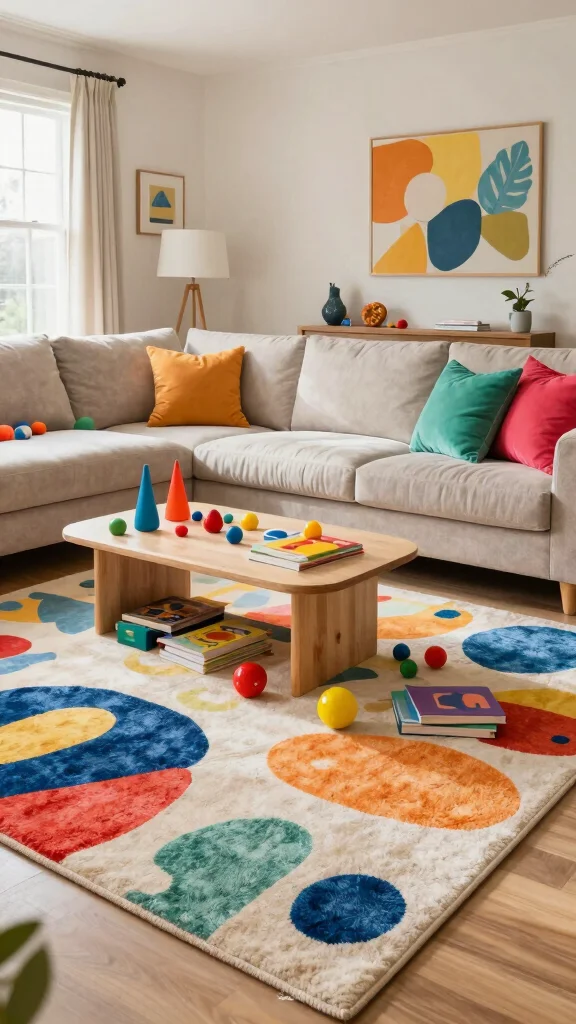
For families, playful area rugs can inject fun and energy into the living room while remaining practical. Look for rugs with whimsical patterns or bright colors that can withstand spills and wear from children and pets. These durable options can serve as play areas or cozy spots for family gatherings, contributing to a lively atmosphere.
Choosing the right playful rug can foster creativity and enjoyment in your family space, making it a welcoming environment for everyone.
Here are some tips for selecting playful designs:
– Opt for rugs made from stain-resistant materials for easy cleaning.
– Select patterns that disguise dirt, such as multi-colored or abstract designs.
– Playful rugs can inspire imagination; consider ones with map patterns or animal prints that excite kids.
This choice enhances your living room’s energy and creates a joyful, engaging space.
13. Layering for Depth
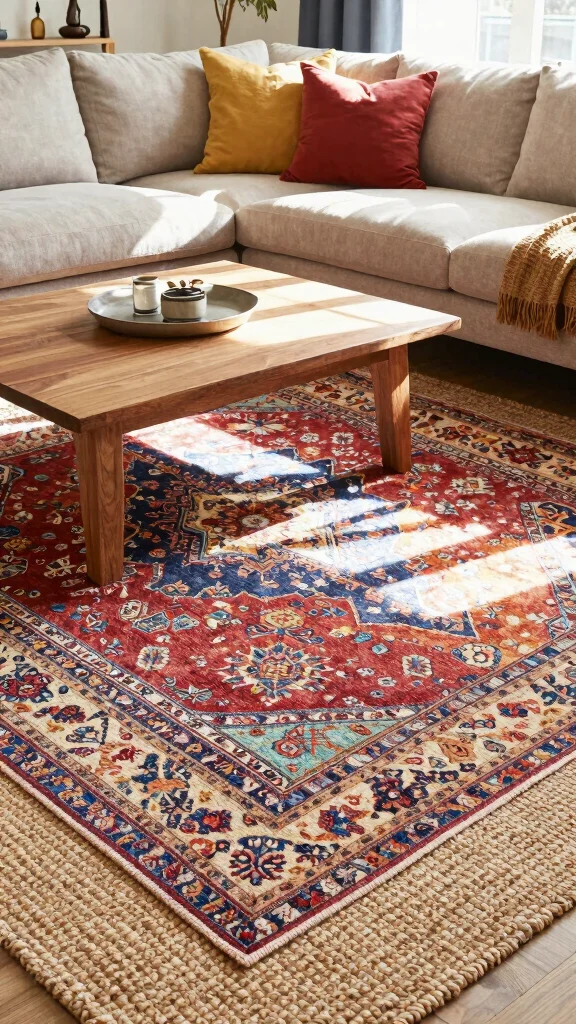
Layering rugs is an effective design strategy to create depth and visual interest in your living room. By combining two or more rugs of varying sizes, textures, and patterns, you can enhance the space’s dynamism and uniqueness. For instance, a large jute rug can serve as a base, while a smaller, patterned rug adds color and personality.
This layering technique works well in both casual and formal settings, allowing you to express your style while maintaining comfort.
Consider these tips for successful layering:
– Ensure the base rug has a neutral or muted tone to keep the focus on the top layer.
– Play with different shapes, like layering a round rug over a rectangular one, for added interest.
– Layering can help define different areas in an open-concept living room, creating functional spaces while maintaining style.
This approach enriches your living space, allowing for creativity and personal expression.
14. Timeless Stripes
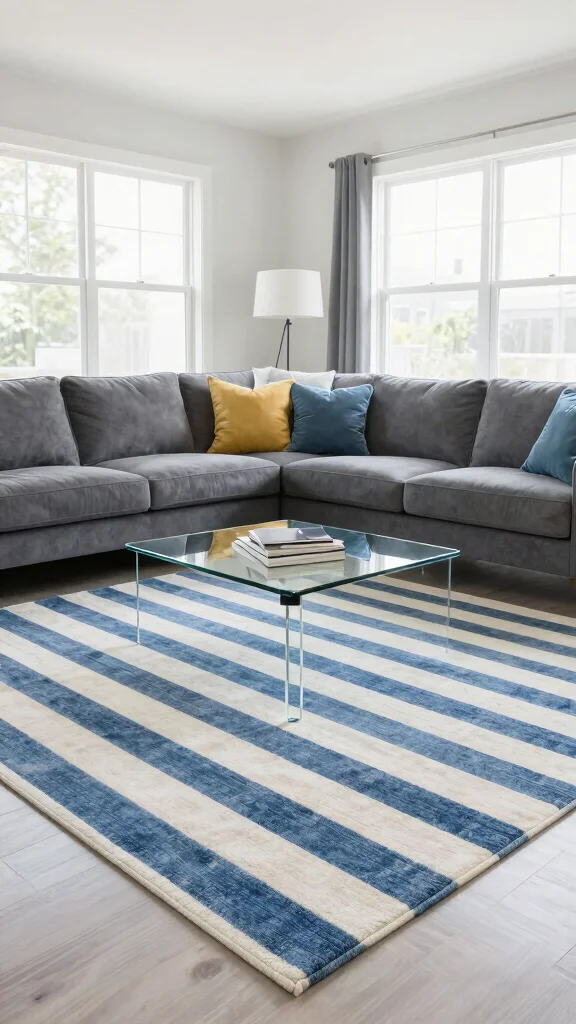
Striped rugs offer a classic choice that can elevate your living room’s style effortlessly. They create movement and flow in the space while visually enhancing its dimensions. Whether opting for bold or subtle stripes, these rugs enhance various design themes, from coastal chic to contemporary minimalism.
Horizontal stripes can create the illusion of a wider room, while vertical stripes add height, making them versatile options for any setting.
Here are some tips for using striped rugs:
– Choose colors that complement your existing palette for a cohesive look.
– Striped rugs pair beautifully with solid furniture and accessories, offering versatile styling options.
– Experiment with stripe orientation; diagonal stripes can introduce a playful twist to your decor.
This approach enhances your living space by adding depth and visual interest while maintaining a timeless elegance.
15. Artistic Flair with Abstract Rugs
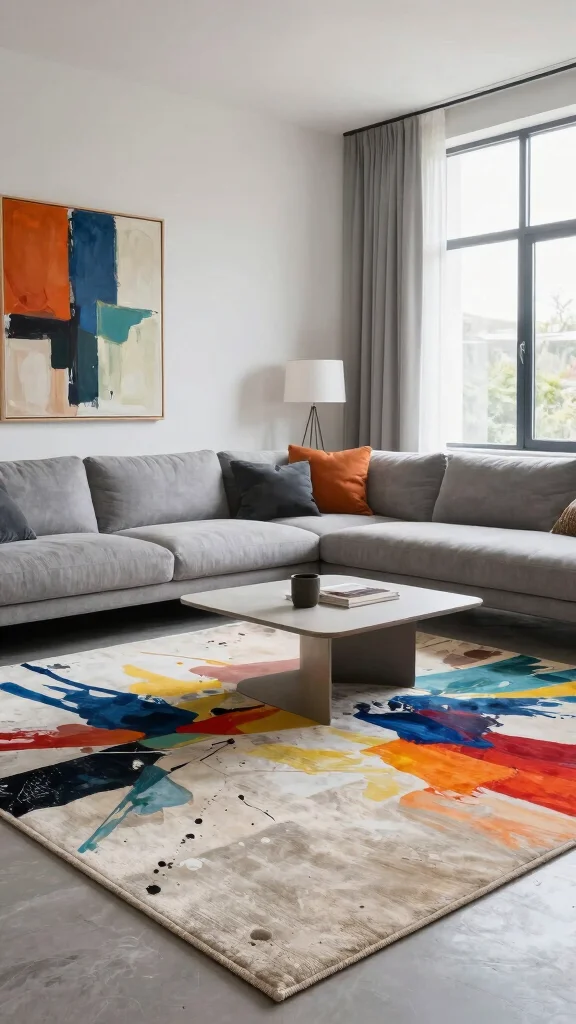
Abstract rugs serve as statement pieces in your living room, inspiring creativity and conversation. Featuring bold colors and striking designs, these rugs provide an artistic touch that can stand out in any space. When incorporating an abstract rug, consider your overall decor style; it should complement rather than clash with other elements.
Pairing an abstract rug with minimalist furniture can create a modern gallery-like atmosphere, emphasizing the artistry of the design.
Here are some tips for using abstract rugs:
– Use a neutral backdrop to allow the rug to take center stage without overwhelming the space.
– Accessorize with art pieces that reflect the rug’s colors or patterns for a cohesive look.
– Abstract rugs offer a fun challenge for styling; use them to explore color and pattern in the rest of your decor.
This choice enriches your living space with creativity and personal expression, making it truly unique.
Abstract rugs are the conversation starters your living room never knew it needed. Pair bold colors with minimalist furniture to keep things fresh and timeless. With transitional area rugs living rooms, you can design a gallery vibe that’s cozy, inviting, and uniquely you.
16. Global Inspirations
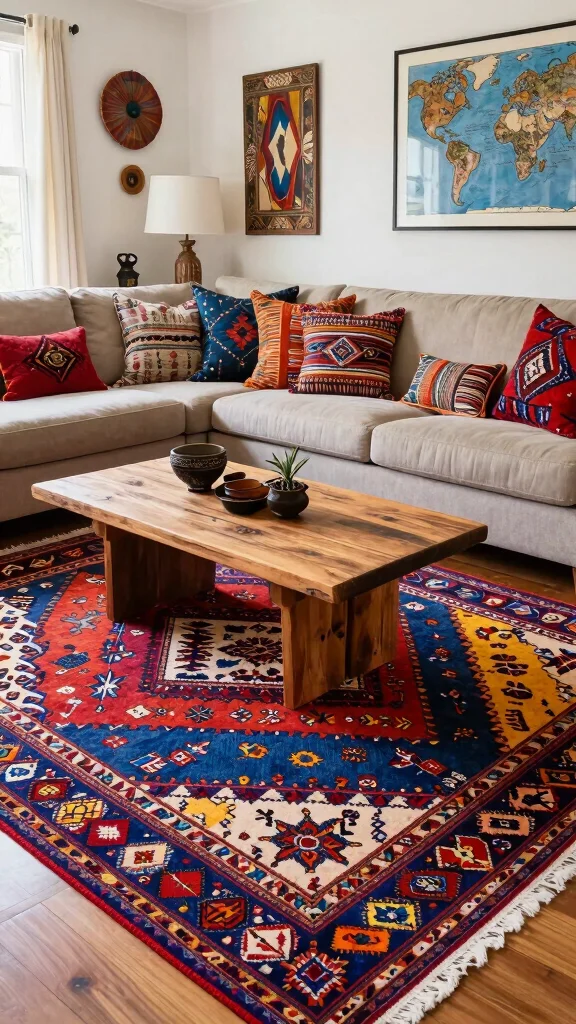
Global-patterned rugs can transport you to distant places while adding a rich cultural element to your living room. Featuring intricate designs inspired by various cultures, from Moroccan to Indian motifs, these rugs can foster a sense of adventure in your decor.
Incorporating global designs allows your living space to reflect your travels or interests, creating a unique and eclectic atmosphere that feels inviting and warm.
Consider these ideas for using global-inspired rugs:
– Pair global patterns with modern or traditional elements for a balanced aesthetic.
– Use accessories from the same culture to enhance the theme of your space.
– Global-inspired rugs often have stories to tell, making them great conversation starters.
This approach not only enriches your living room’s design but also invites a sense of worldly charm.
17. Seasonal Swaps
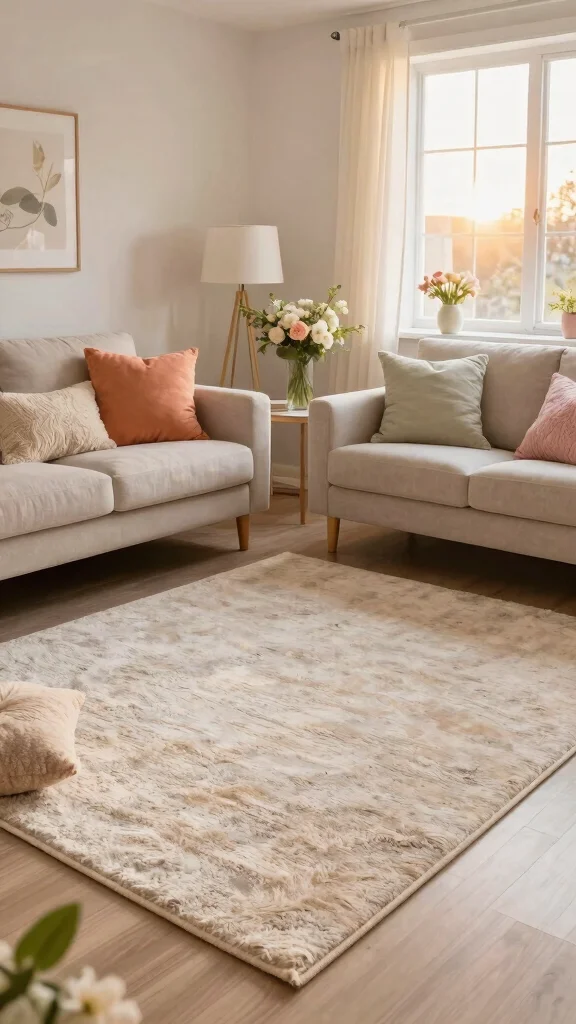
Seasonal rug swaps allow you to keep your living room feeling fresh and aligned with the changing seasons. By rotating a couple of rugs throughout the year, you can adapt your decor and breathe new life into your space. Light, airy rugs in pastel colors can evoke spring vibes, while rich, warm tones create a cozy atmosphere in winter.
This practice also encourages exploration of different patterns and textures, keeping your living area dynamic and engaging.
Here are some tips for seasonal swaps:
– Store off-season rugs properly; roll them instead of folding to prevent creases.
– Pair seasonal decor items like cushions and throws with your rug for a cohesive transition.
– Seasonal swaps can spark new design ideas for other elements in your living room.
This approach not only refreshes your space but also allows for creative expression throughout the year.
Conclusion
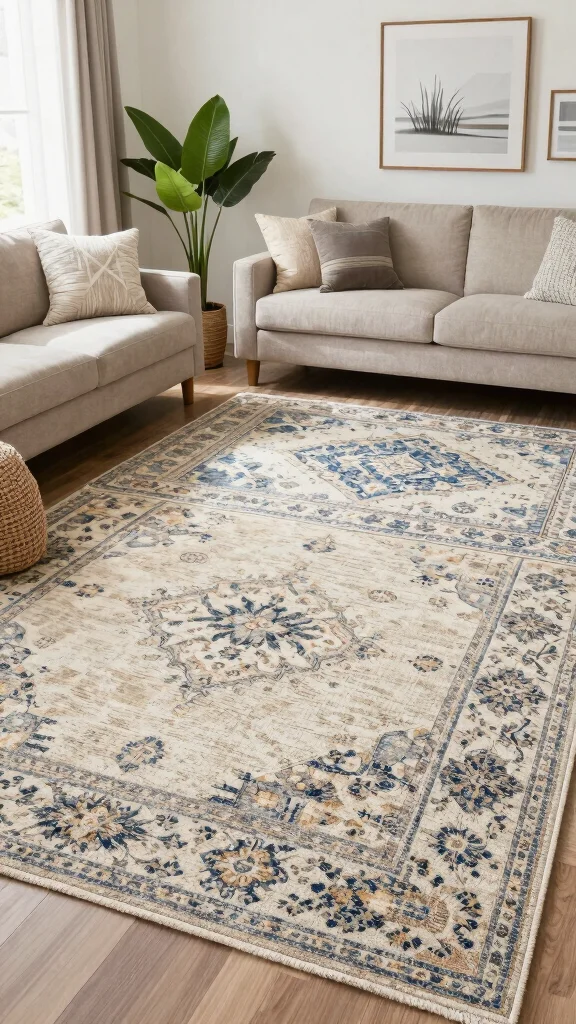
Transitional area rugs can truly transform your living room, bringing together various styles and creating a sense of harmony. By selecting eco-friendly options, you not only contribute to a sustainable future but also add a unique touch to your home.
From bold patterns to soft neutrals, there’s a perfect rug out there for every aesthetic. Embrace these trends and let your living room reflect your personality while being environmentally responsible.
Related Topics
transitional area rugs
living room design
eco-friendly decor
modern home decor
area rug styles
stylish rugs
home interior trends
sustainable living
bohemian style
minimalist design
budget friendly
seasonal decor

I am Đinh Ai Nguyễn, a content writer at SoftAuraHome.com. For me, home is more than just a place to live. It is where we recover from long days, hold our quiet moments, and create the atmosphere that shapes how we feel. That belief is one of the biggest reasons I wanted to be part of this blog. I started writing about home decor because I have always been drawn to spaces that feel soft, peaceful, and emotionally grounding. I believe a calm room can do more than look beautiful. It can bring comfort, restore energy, and help people feel more connected to themselves and the life they are building. Through Soft Aura Home, I want to share ideas that are not only visually inspiring, but also meaningful in everyday life. With experience in SEO writing and niche content publishing, I understand how to create articles that are clear, useful, and easy to discover. But beyond strategy, I care deeply about how a piece of content makes someone feel. Every article I write is created with the hope of helping readers shape homes that feel gentle, personal, and full of quiet warmth.
Follow on Facebook